EPS vs Rock Wool Sandwich Panel: The Fire Rating Reality Check
The 15-Second Test: Understanding the Stakes in Panel Selection
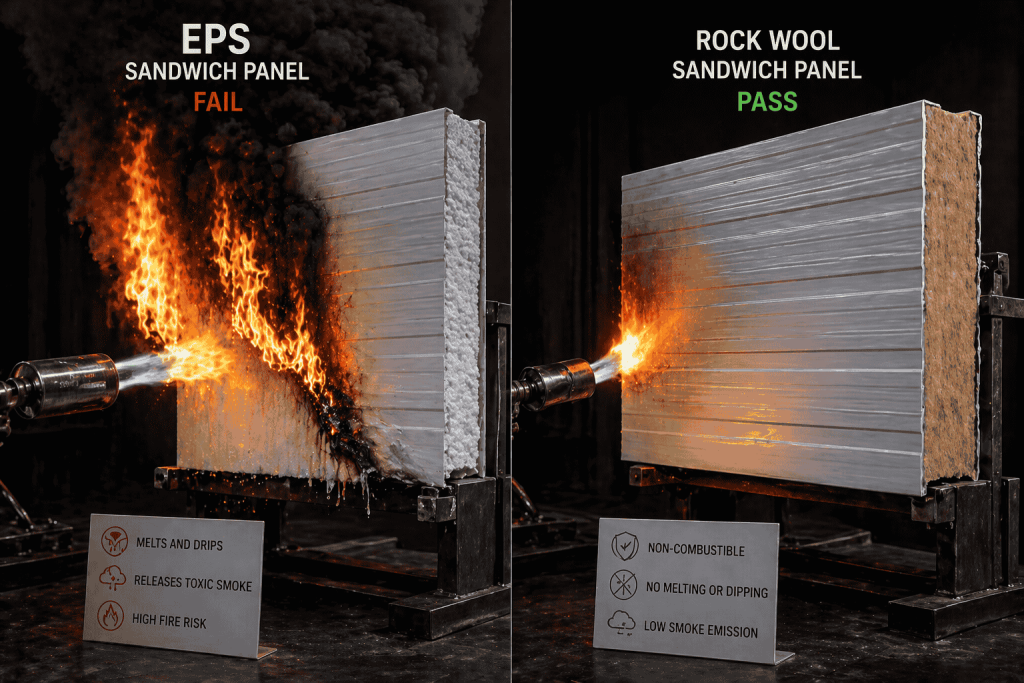
Imagine exposing a building material to a direct, open flame. In a standard 15-second ignition test, the difference between core materials becomes a matter of life and death. Expanded Polystyrene (EPS) rapidly begins to melt, ignite, and shed burning droplets. Under the exact same intense thermal conditions, rock wool remains structurally intact, completely refusing to catch fire.
This stark, undeniable contrast forms the foundation of the EPS vs rock wool sandwich panel fire comparison. For industrial builders, architects, and facility managers, selecting the right insulated metal panel is no longer just about thermal efficiency or upfront costs. Modern building codes and stringent insurance requirements have made fire safety the paramount deciding factor.
At Henan Tseason Panel Co., Ltd, we understand that navigating global fire safety regulations can be complex. Choosing between a highly combustible core and a non-combustible core directly impacts your facility's safety, legal compliance, and long-term operational costs. This comprehensive technical guide breaks down the exact fire performance metrics, testing standards, and real-world implications of choosing EPS versus rock wool for your next industrial project.
Fire Classification Standards Explained
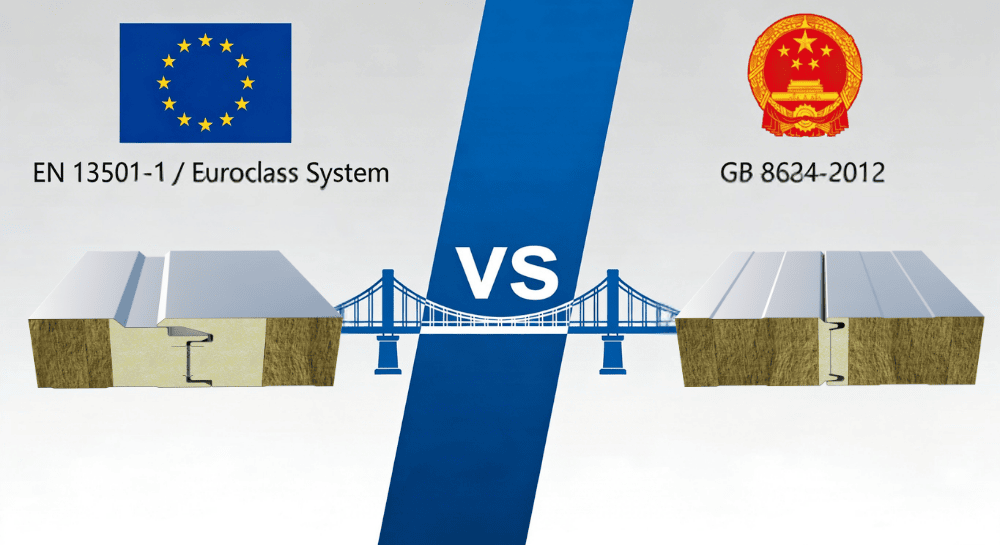
To accurately evaluate an EPS sandwich panel fire rating against a rock wool sandwich panel fire rating, one must understand the international testing frameworks that govern building materials. The two most prominent regulatory standards in the global B2B construction sector are the European standard (EN 13501-1) and the Chinese standard (GB 8624-2012).
These standards do not merely ask, "Does it burn?" They rigorously quantify how a material reacts to fire across several critical parameters: ignitability, heat release (calorific value), smoke production, and the generation of flaming droplets.
Key Testing Parameters
- Combustibility Class: Ranging from A1 (completely non-combustible) down to F (highly combustible, untested).
- Smoke Production (s): Rated from s1 (minimal smoke) to s3 (high, dense smoke production). Smoke inhalation is the leading cause of fire-related fatalities.
- Flaming Droplets (d): Rated from d0 (no droplets) to d2 (heavy burning droplets). Droplets rapidly spread fire to lower floors and surrounding equipment.
EN 13501-1 vs GB 8624-2012 Cross-Reference Table
Tseason has conducted a comprehensive analysis. you can also check-EN 13501-1 vs. GB 8624: Technical Comparison for Sandwich Panel Procurement
| Dimension | EN 13501-1 | GB 8624-2012 |
| Issuing body | CEN (European) | AQSIQ/SAC (China) |
| Current version | EN 13501-1:2018+A1:2019 | GB 8624-2012 |
| Classification grades | A1, A2, B, C, D, E, F | A, B1, B2, B3 |
| Smoke sub-class | Yes (s1/s2/s3) | No |
| Droplets sub-class | Yes (d0/d1/d2) | No |
| Approx. A1 equivalent | EN A1 | GB A |
| Required for CE marking | Yes | No |
| Used in | EU + many export markets | Mainland China |
EPS vs Rock Wool: Side-by-Side Fire Performance
When conducting a thorough EPS vs rock wool sandwich panel fire comparison, the empirical data reveals a massive performance gap. The physical properties of these two materials dictate entirely different behaviors when exposed to high temperatures.
Expanded Polystyrene (EPS): The Combustibility Risk
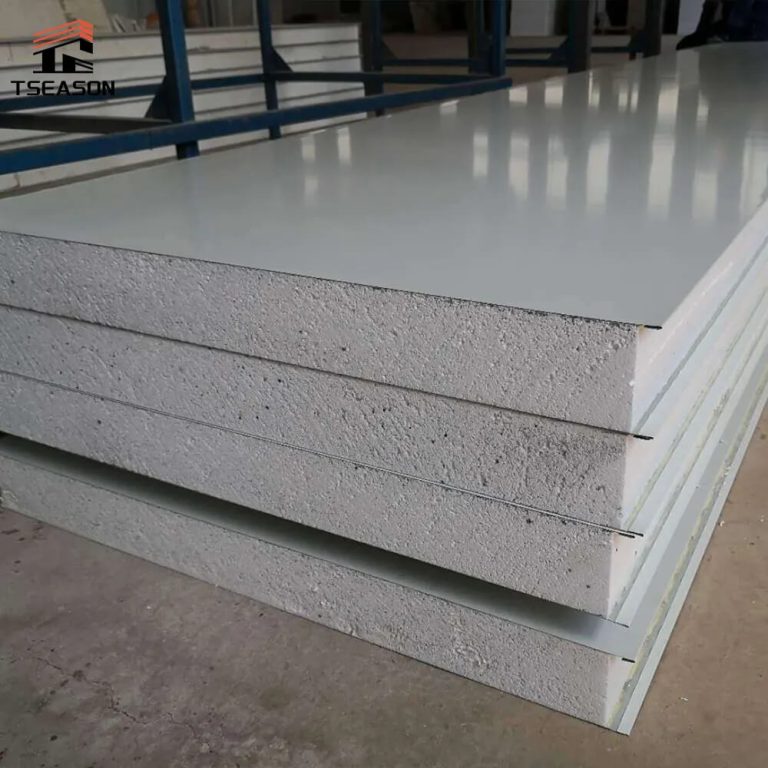
EPS is a lightweight, closed-cell synthetic material derived from petrochemicals. While it offers a low thermal conductivity of 0.030-0.040 W/m·K and an ultra-light density of 10-30 kg/m³, its fire performance is fundamentally hazardous.
Under GB 8624-2012, standard EPS achieves only a B3 rating. Under EN 13501-1, it falls into Class F, meaning it fails to pass even the basic E-class requirements. During the EN ISO 11925-2 ignitability test, EPS exhibits a flame spread of >150mm within just 20 seconds. Furthermore, its gross calorific value is >39.7 MJ/kg. In practical terms, this means EPS acts as a massive fuel source during a fire. It has a low ignition temperature of 350-450°C, produces toxic, dense black smoke (s2-s3 rating), and melts into burning liquid pools (d2 rating) that accelerate fire spread.
Rock Wool: The Ultimate Fire Barrier
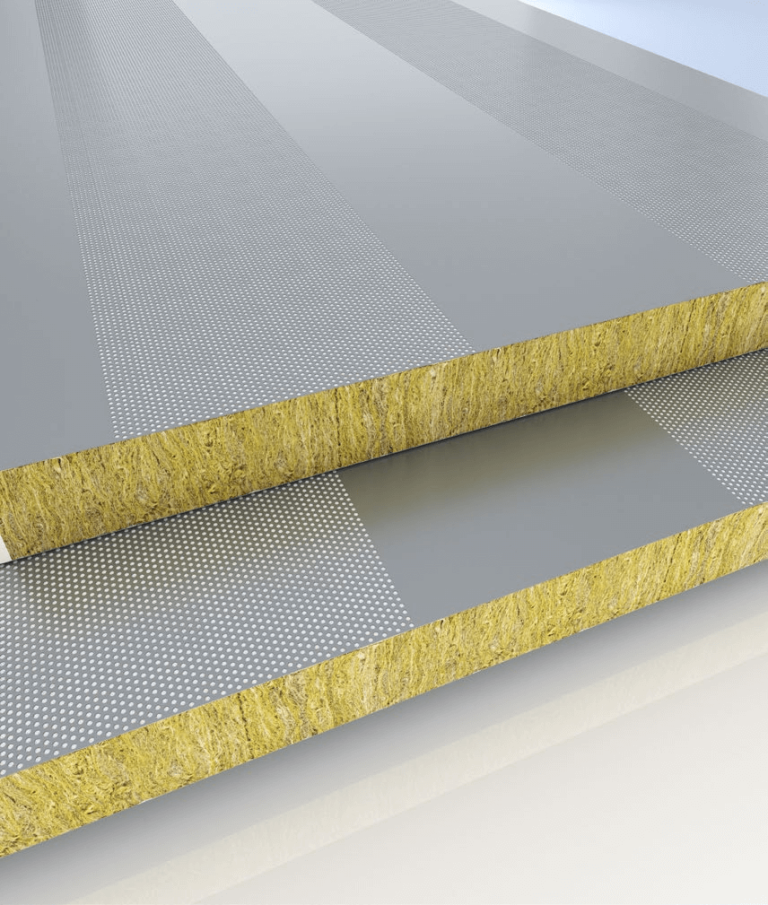
Rock wool (mineral wool) is manufactured by spinning molten basalt rock and slag into fine fibers at extremely high temperatures. It possesses a thermal conductivity of 0.030-0.045 W/m·K and a robust density of 60-200 kg/m³. Because it is made of stone, it is inherently non-combustible.
Rock wool achieves the highest possible A1 fire rating under EN 13501-1. During the rigorous EN ISO 1182 non-combustibility test, rock wool demonstrates a temperature rise of ≤30°C, a mass loss of ≤50%, and zero sustained flaming. Its gross calorific value (EN ISO 1716) is a negligible
B3 EPS vs A1 Rock Wool Quantified Comparison
| Performance Metric | EPS Sandwich Panel (B3/F) | Rock Wool Sandwich Panel (A1) |
| Fire Rating (EN / GB) | Class F / Class B3 | Class A1 / Class A |
| Ignition Temperature | 350-450°C | Non-ignitable (Melts >1000°C) |
| EN ISO 11925-2 (Flame Spread) | >150mm within 20 seconds | Zero flame spread |
| Gross Calorific Value | >39.7 MJ/kg (High fuel load) | <2.0 MJ/kg (No fuel load) |
| EN ISO 1182 Test Results | Fails entirely | Temp rise ≤30°C; Mass loss ≤50%; Zero flaming |
| Smoke Rating | s2-s3 (High, toxic smoke) | s1 (Minimal smoke) |
| Droplet Rating | d2 (Burning droplets/falling particles) | d0 (No burning droplets) |
| Density | 10-30 kg/m³ | 60-200 kg/m³ |
| Thermal Conductivity | 0.030-0.040 W/m·K | 0.030-0.045 W/m·K |
Real Fire Incidents & Insurance Impact
The theoretical data regarding the B3 vs A1 fire rating sandwich panel translates into severe real-world consequences. The global construction industry experienced a paradigm shift following the tragic Grenfell Tower fire in London in 2017[source: Grenfell Tower Fire Inquiry Report]. The disaster, which resulted in 72 deaths, was drastically accelerated by the use of highly combustible cladding (including EPS and PIR materials) on the building's exterior. The petrochemical core ignited, creating a "chimney effect" that allowed the fire to engulf the high-rise structure in minutes, fueled by the melting, dripping plastic core.
Post-Grenfell, the global insurance and regulatory landscape has fundamentally changed. Building with B3/F class materials like EPS now carries massive financial and legal liabilities.
The Financial Reality of Compliance Risk
- Premium Penalties: Commercial buildings utilizing non-A1 combustible panels frequently face a 15-30% insurance premium increase annually compared to A1-rated structures.
- Policy Denial Risk: For high-rise buildings or high-occupancy industrial facilities utilizing combustible cladding, there is a severe and growing risk of outright insurance policy denial. Many underwriters refuse to cover B3 EPS structures.
- Premium Discounts: Conversely, utilizing A1-rated rock wool panels is viewed as a premier risk-mitigation strategy. Rock wool buildings currently qualify for significant premium discounts and favorable underwriting terms in over 12 countries.
Application Guide: Which Industry Needs What
Understanding the EPS vs rock wool sandwich panel fire comparison allows facility managers to make informed, compliant decisions based on their specific industry requirements.
When is EPS Used?
Historically, EPS was favored for its extreme light weight, moisture resistance, and low cost. Today, its use is heavily restricted. EPS should only be considered for strictly low-risk, non-fire-critical, or temporary structures where local building codes explicitly permit B3 materials. In the past, it was heavily used in cold storage due to its moisture barrier properties. However, due to the extreme fire risks, modern cold storage facilities are rapidly transitioning away from EPS, moving toward PIR (Polyisocyanurate) or specialized vapor-sealed rock wool systems to maintain safety compliance.
When is Rock Wool Mandatory?
- Industrial Manufacturing: Facilities involving high heat, welding sparks, or combustible chemicals require the >1000°C melting point of rock wool to prevent catastrophic factory fires.
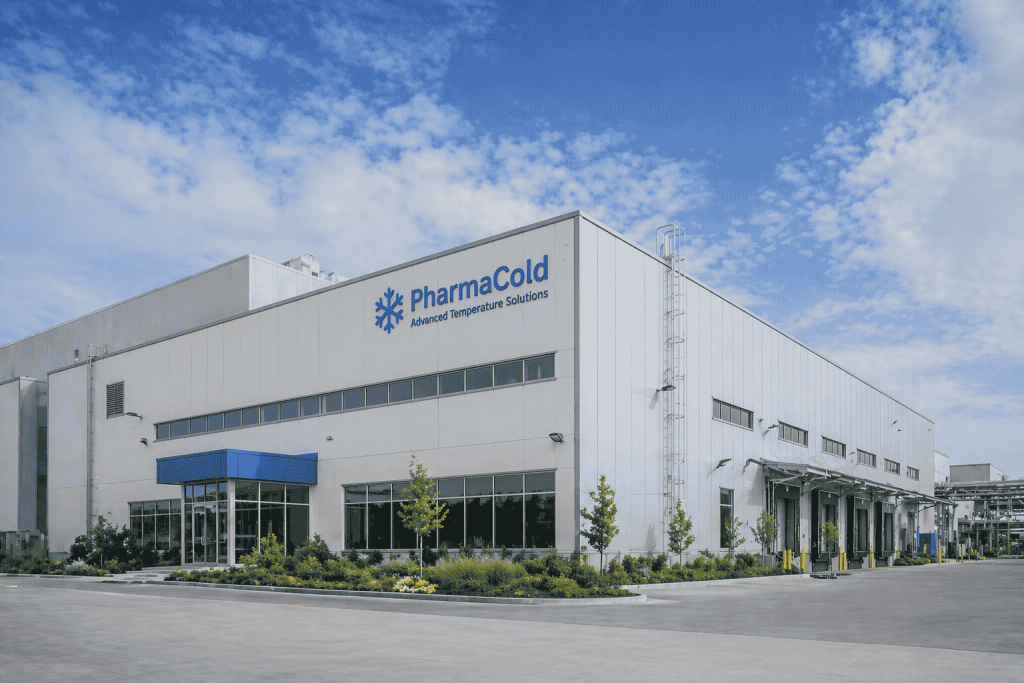
- Pharmaceuticals & Cleanrooms: High-value assets, sensitive equipment, and strict regulatory environments demand the A1 non-combustible rating and s1 smoke rating to prevent contamination and total loss during a fire event.
- Public & High-Rise Buildings: Any structure with high human occupancy (airports, hospitals, commercial high-rises) must utilize A1 rock wool to ensure structural integrity and safe evacuation times, completely eliminating the risk of d2 burning droplets.
Frequently Asked Questions
Q1: What is the main difference in fire rating between EPS and rock wool?
The main difference is combustibility. Rock wool holds an A1 (non-combustible) fire rating, meaning it will not burn, spread flames, or add fuel to a fire. EPS holds a B3/F rating, meaning it is highly combustible, ignites easily, and spreads fire rapidly.
Q2: Can EPS sandwich panels be made fireproof?
No. While standard EPS can be treated with chemical flame retardants to slightly delay ignition (achieving a B2 or B1 rating under GB standards), the core remains fundamentally petrochemical. It will eventually melt and burn under sustained heat. It can never achieve the A1 non-combustible status of rock wool.
Q3: At what temperature does rock wool melt?
Rock wool has an exceptionally high thermal threshold, with a melting point exceeding 1000°C (1832°F). This allows it to act as a physical firewall, maintaining structural integrity and protecting the building framework during a severe fire.
Q4: How do fire ratings affect my building insurance?
Fire ratings drastically impact commercial property insurance. Buildings using combustible panels (like EPS) face a 15-30% premium increase or complete policy denial. Buildings utilizing A1-rated rock wool panels are considered low-risk and often qualify for substantial premium discounts.
Q5: Which panel is better for cold storage facilities?
While EPS was traditionally used for cold storage due to its moisture resistance, its severe fire risk makes it a liability. Today, PIR (Polyisocyanurate) is preferred for cold storage as it offers better fire resistance (B1/B2) than EPS while maintaining excellent thermal and moisture barriers. For maximum fire safety, vapor-sealed rock wool is used.