TPO Roofing Colors: Options, Energy Performance, and How to Choose
Choosing the right TPO roofing system is not just about choosing a trustworthy manufacturer. The color of the TPO roofing may affect the sun reflection performance of the roof, the performance of building energy consumption, and the compliance of the project with energy-saving specifications or green building requirements. Whether you are planning to build a new roof or replace an existing roof, understanding the color selection of TPO roofs can help you maximize your investment.
This article will introduce the common TPO color options and analyze the role of colors in energy performance, code requirements and building appearance to help you gain a more comprehensive understanding of how to choose the right TPO roofing membrane.
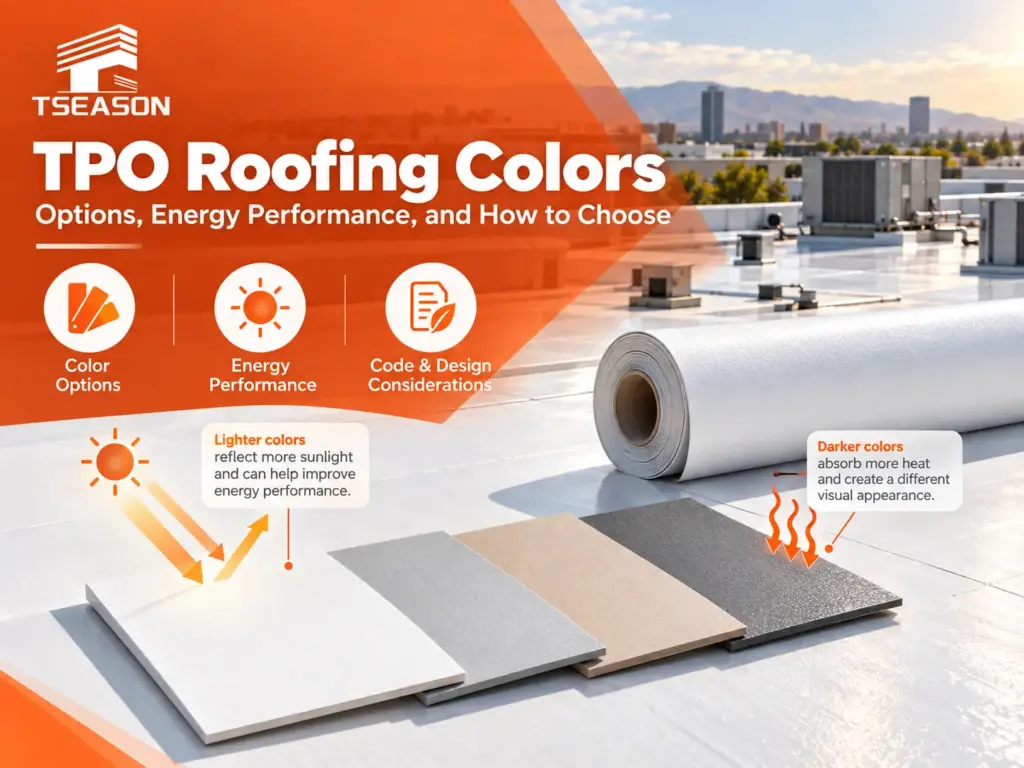
What TPO Colors Are Available?
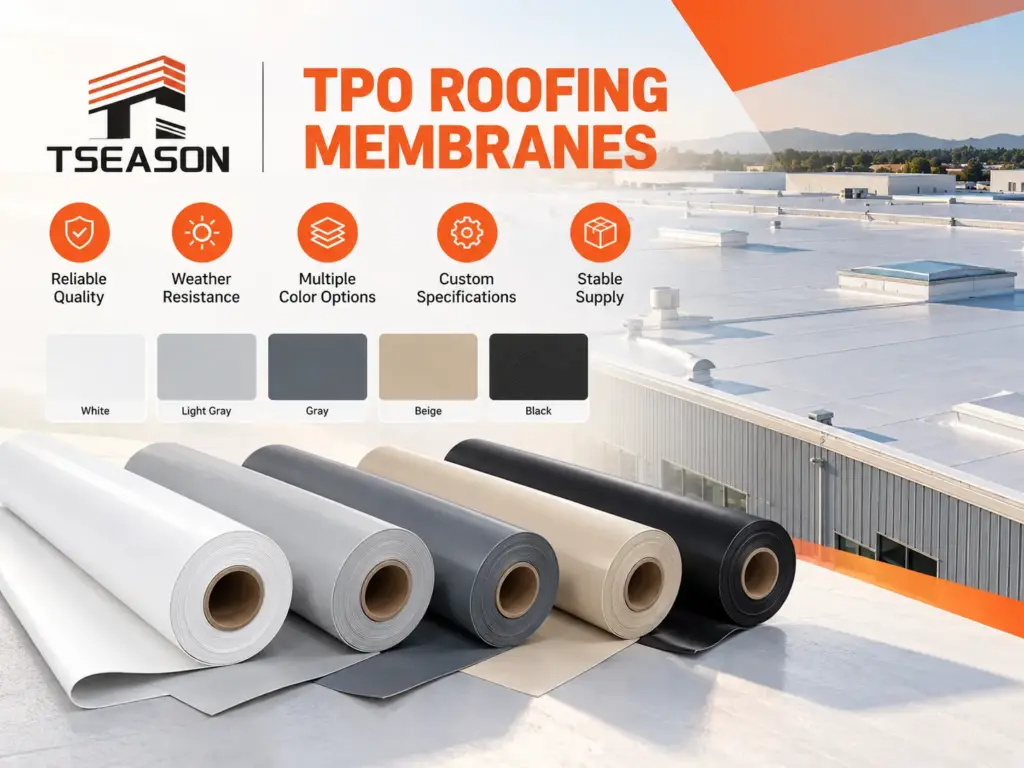
TPO roofing waterproof membranes have a variety of standard colors to choose from, among which white, beige and gray are the most common. Some manufacturers also offer black or other special colors, but the specific availability should also depend on the product line and regional demand. Each color serves a different purpose:
- White: The standard color of the industry; the highest reflectivity of sunlight, which is most suitable for hot areas and heat-reflective roofing projects.
- Beige: Features a soft appearance and moderate solar reflectance.
- Gray: Moderate reflectivity, better at concealing dirt and marks from foot traffic on the roof than white.
- Black: Only suitable for projects with high requirements for thermal absorption performance or aesthetics.
- Customized color: Available for large-volume orders; suitable for brand buildings or design-driven projects.
Choosing the right color depends on the geographical location of the building, energy targets, local climate and architectural preferences, not just the appearance.
Why TPO Roofing Color Matters: Energy, Codes, and Aesthetics
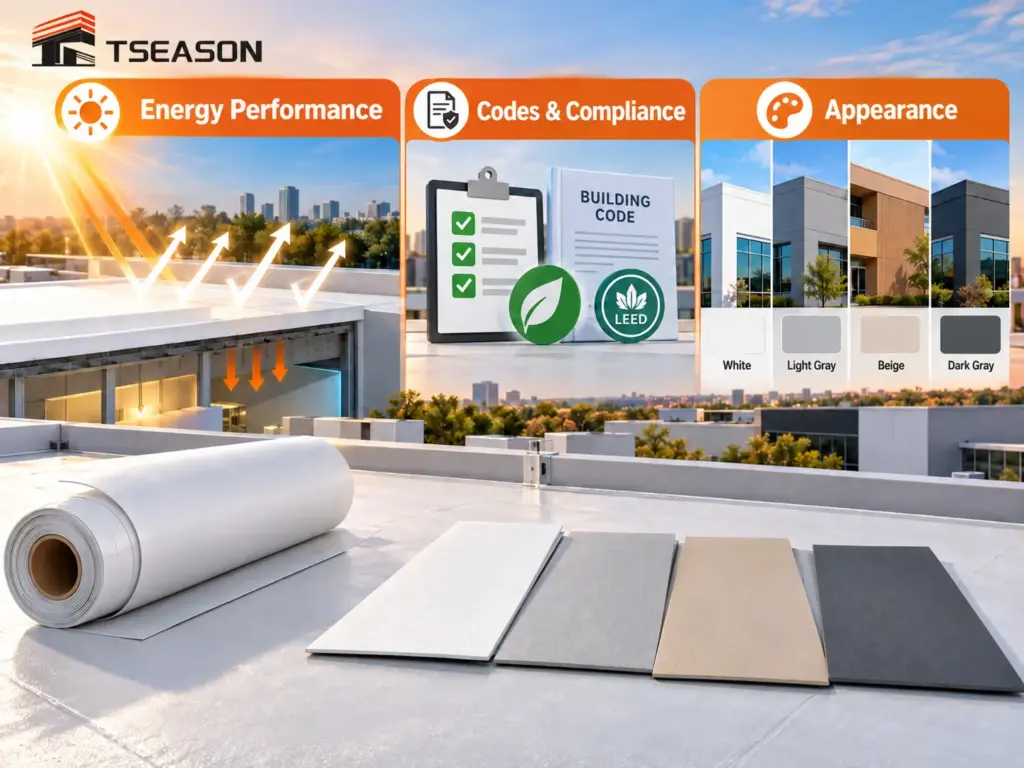
Energy Performance
The energy performance of TPO color and roof is mainly reflected in the solar reflection ability. Light-colored membranes, especially white TPO, usually have a high solar reflectance, which can reflect more solar radiation and reduce heat absorption. In areas with strong sunlight and high summer temperature, this kind of roof can help lower the surface temperature of the membrane, reduce the transfer of heat into the building, and help reduce the cooling load of the building. However, the energy-saving effect of the roof is not determined by the color alone. The thickness of the insulation layer, the roof structure, the local climate, the building use, and the solar reflectance and thermal emissivity of the membrane itself will all have an impact. When comparing TPO membranes of different colors, it should not be simply assumed that the lighter the color, the more energy-saving it is. It should be assumed in combination with the actual test data of the product and the entire roof system.
Cool Roof Codes, Green Building Credits & Compliance
For some commercial and industrial building projects, TPO colors may also involve cool roof requirements and green building certification. Some areas or building standards will put forward minimum requirements for the sun reflection performance of roofs according to climatic conditions. Certain green building systems will also include roofs that meet specific reflectivity and thermal performance standards in their evaluation criteria. However, choosing white TPO does not necessarily mean that a project will comply with all relevant codes. Whether it actually meets the requirements depends on the test performance of the specific product, the roofing system, the location of the building and the applicable building codes or certification standards. For projects with clear compliance requirements, local regulations should be confirmed before color selection, and the product performance data provided by the supplier should be checked.
Appearance
In addition to energy performance and code requirements, color will also affect the overall appearance of the building. White, gray, beige and other different TPO colors can create different visual effects with the exterior walls, doors and windows of the building and the surrounding environment. For functional buildings such as warehouses and factories, energy performance, product supply and project requirements are usually given priority; while for commercial buildings or projects with high requirements for architectural image, the roof color may need to harmonize with the overall design style. When a variety of TPO colors can meet the technical requirements of the project, the architectural appearance can be used as a further screening factor.
How to Select TPO Color
When choosing the color of TPO roofing, it is not recommended to make a comprehensive judgment solely based on personal preferences, but should be based on the climate of the building location, energy targets, local codes and the aesthetic requirements of the project. For areas with strong sunlight and hot summer, light-colored TPO with high solar reflection performance can be prioritized to reduce the absorption of solar heat by the roof. If the project area or building codes have clear requirements for cool roof, the required solar reflectance, heat emissivity and other properties should be confirmed first, and then choose the products that meet the requirements.
For commercial buildings with requirements for architectural image, it is also necessary to consider the coordination of roof color with exterior walls, doors and windows and the overall design style. White usually has strong reflective properties, while gray and beige can provide different visual effects. If the project needs to customize the color, the supplier's color range, customization terms and supply cycle should be confirmed in advance.
Color is not the only parameter to pay attention to when choosing TPO membranes. The thickness of the membrane material, the reinforcement method, the dimensional specification, the welding performance and the roofing system adopted by the project will also affect the final choice. For large-scale commercial or industrial projects, product specifications and long-term supply capacity should be confirmed while determining the color, so as to ensure that the selected TPO meets both the performance requirements of the project and the overall procurement and construction schedule.
Why Choose Tseason for TPO Roofing Membranes?
Tseason provides TPO waterproof membranes suitable for commercial buildings, industrial facilities, warehouses and other low-slope roofs, and can provide corresponding product specifications according to the performance and construction requirements of different projects. Tseason focuses on product quality, specification compatibility and stable supply chain to help customers complete the selection and procurement of TPO materials more efficiently. In addition to parameters such as membrane thickness, reinforcement method and dimensions, Tseason also can provide different color options according to project requirements to help customers choose suitable TPO products according to local climate, roof design, energy-saving goals and building aesthetics.
If you are choosing the appropriate TPO roof color and product specifications for the project, please feel free to consult Tseason. We can provide tailored product solutions according to the specific project needs. For custom colors, specifications, or to request samples, please contact us directly for further information.
FAQs
- Does TPO Roofing Color Fade Over Time?
TPO roofing membranes are designed for long-term outdoor exposure, but their appearance can gradually change after years of exposure to sunlight, temperature fluctuations, moisture, and airborne pollutants. The degree of color change depends on the formulation of the membrane, pigment stability, UV resistance, environmental conditions, and maintenance. A slight change in appearance does not necessarily indicate that the membrane has lost its waterproofing function. When color retention is important for a project, it is better to review the manufacturer's weathering and product-performance data rather than judge durability based on color alone.
- How Does TPO Color Affect Roof Temperature?
TPO color affects how much solar radiation the roof surface absorbs. Light-colored membranes, particularly white TPO, generally reflect more sunlight and absorb less solar heat than darker surfaces. Under strong sunlight, this can result in a lower roof surface temperature and may help reduce heat transfer into the building. However, the actual thermal performance of a roof is also influenced by insulation, roof assembly, climate, building use, and membrane properties. Therefore, color should be considered together with solar reflectance and thermal emittance data rather than treated as the only indicator of energy performance.
- What Should You Consider Besides TPO Color?
Color is only one part of TPO membrane selection. A suitable product should also match the project's required membrane thickness, reinforcement, dimensions, installation system, and expected service conditions. Climate and roof exposure can influence the performance requirements, while project scale may make product availability and lead time important considerations. For commercial and industrial applications, contractors and building owners should also verify the manufacturer's technical documentation and ensure that the selected membrane is compatible with the overall roof assembly and project specifications.
- Is White TPO Roofing Always the Best Choice for a Hot Climate?
White TPO is often considered for buildings in hot or sunny climates because of its high solar reflectance, which can help limit solar heat absorption at the roof surface. However, it is not appropriate to describe one color as universally suitable for every project. The building's insulation, roof construction, local climate, energy objectives, and applicable requirements all affect the final decision. When selecting TPO for a hot climate, it is more useful to compare the actual solar reflectance and thermal emittance of available products and then determine whether their performance meets the project's requirements.
- Can TPO Roofing Membranes Be Available in Custom Colors?
Some TPO manufacturers can provide custom or project-specific color options, but availability depends on the manufacturer's production capabilities, product range, order quantity, and other project conditions. Custom colors may require additional lead time and should generally be confirmed before production. For projects where color consistency is important, customers should also review a physical sample or approved color standard before placing a large order. Standard colors are typically more straightforward for routine projects, while custom colors may be considered when architectural design or brand req