What Is the Best Flat Roof Material? TPO vs. EPDM vs. PVC
For flat roof projects, choosing suitable roofing materials is not just about comparing material prices or expected service life. TPO, EPDM, PVC, modified bitumen and other materials have their own characteristics, and there are obvious differences in their waterproof performance, seaming method, weather resistance, installation requirements and long-term maintenance cost. It is difficult for us to simply say which material is suitable for all buildings. A truly reasonable choice needs to be judged comprehensively in combination with the building type, local climate, roof usage, budget and overall roofing system.
This article will compare several common flat roof materials, analyze their advantages and disadvantages from different application scenarios, and explain why TPO membrane is often used in commercial and industrial construction, and what technical factors should be considered when purchasing TPO roofing membranes. After reading this article, you will be able to make better decisions.
What Makes a Good Flat Roof Material?
When choosing flat roof materials, you can't just look at a single indicator. Flat roofs usually have a low slope, and the materials need to cope with problems such as rain, sun, temperature fluctuations, mechanical wear and long-term maintenance. A suitable roofing material should be balanced between various factors.
Waterproofing and Seam Performance
Waterproof performance is the most basic requirement for flat roof materials, but the performance of the membrane itself is not the only determining factor, and the quality of the seam is equally important. Different methods such as hot air welding, adhesive bonding, or tape sealing will affect the continuity and long-term reliability of the seam. When selecting materials, the membrane performance and the overall seam system should be considered at the same time.
Climate and UV Resistance
The roof is exposed to sunlight, rain and temperature fluctuations for a long time, and the material needs to have excellent weather resistance and UV resistance. For areas with high temperature or strong sunlight, solar reflectance is an important factor; in cold areas, attention should be paid to the flexibility and stability of materials in low-temperature environments.
Durability and Foot Traffic
The roof may need to withstand the mechanical effect of hail, debris, equipment maintenance and foot traffic. The puncture resistance, tear resistance and wear resistance will directly affect the durability. For commercial or industrial roofs requiring frequent equipment maintenance, performance can be enhanced through system designs that incorporate reinforcement layers, protective layers, and dedicated walkways.
Initial Cost vs. Lifecycle Cost
When choosing membrane material, you should not only look at the initial material price, but also consider the long-term cost. In addition to the membrane itself, there are also unavoidable costs such as installation labor, insulation, maintenance, repair and future replacement. For commercial and industrial projects, instead of simply pursuing lower purchase prices, it is better to comprehensively compare the cost and performance of the entire use cycle.
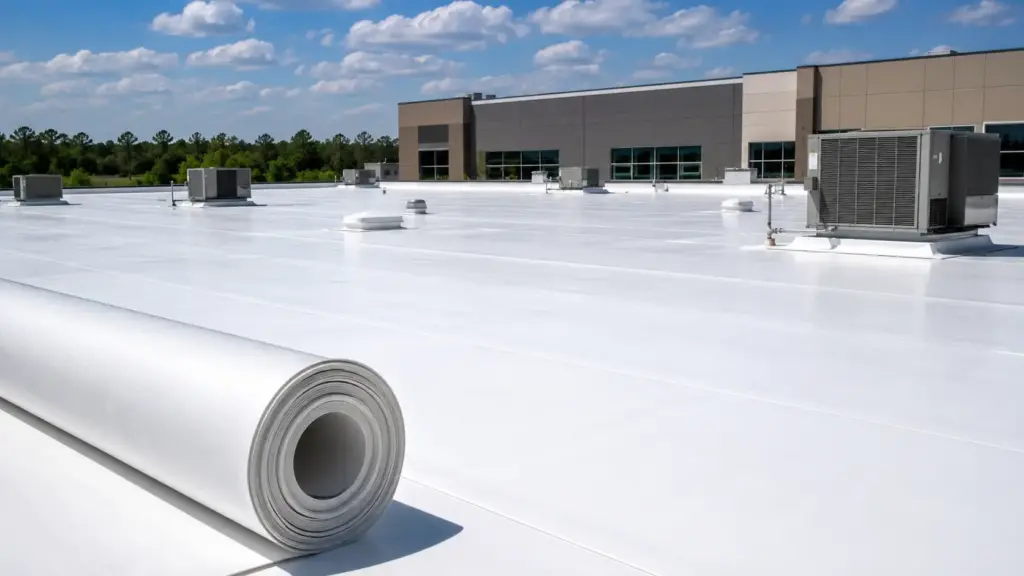
TPO vs. EPDM vs. PVC vs. Modified Bitumen
TPO Roofing
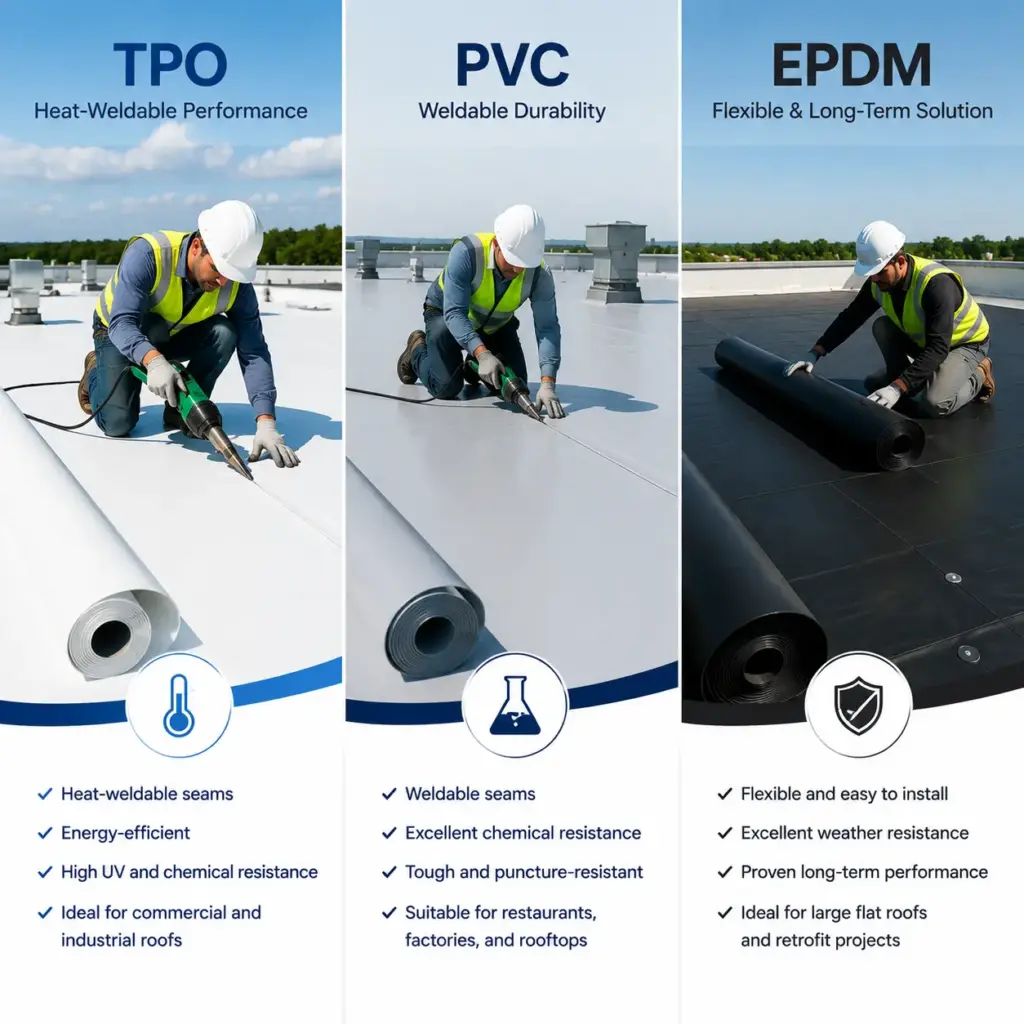
TPO is a thermoplastic single-story roofing membrane, which is widely used in commercial and industrial buildings because of its good weather resistance, sun reflection performance and seam reliability. TPO membrane is usually welded by hot air to form continuous seams, which can provide reliable waterproof performance.
EPDM Roofing
EPDM is a synthetic rubber-based single-ply roofing membrane that offers excellent flexibility and weather resistance. It can adapt to a certain degree of temperature changes and substrate movement, and has long-term application experience in commercial and low-slope roofs. EPDM seams are typically sealed using adhesives, tapes, or similar methods.
PVC Roofing
PVC is a thermoplastic single-layer roofing membrane, which usually uses hot air welding to treat the seams, which can form a continuous and reliable waterproof layer. One of the outstanding advantages of PVC is its strong resistance to chemicals, grease and other pollutants, as well as good weather resistance and sun reflection properties, but its material cost is usually relatively high.
Modified Bitumen
Modified bitumen is a low-slope roofing system based on modified bitumen. A multi-layer structure is usually used to enhance waterproof performance and mechanical durability. However, its multi-layer structure makes the installation process more complicated, which may bring higher labor and installation costs.
Flat Roof Material Comparison
| Material | Seam Method | Key Strengths | Potential Limitations | Best Suited For |
| TPO | Hot-air welded | Solar reflectivity, reliable seams, lightweight, balanced overall performance | Performance depends on proper welding and system design | Commercial buildings, warehouses, factories, and other low-slope roofs |
| EPDM | Adhesive, seam tape, or bonded systems | Excellent flexibility, weather resistance, proven long-term use | Lower solar reflectivity than white TPO or PVC | Budget-conscious commercial and low-slope roofing projects |
| PVC | Hot-air welded | Strong chemical and grease resistance, good weatherability, reflective options | Generally higher material cost | Commercial kitchens, restaurants, and chemically exposed environments |
| Modified Bitumen | Adhesive, heat-applied, or self-adhered systems | Layered construction, impact resistance, established roofing methods | More complex installation and greater labor requirements | Low-slope roofs requiring a traditional, durable membrane system |
What Is the Best Flat Roof Material for Different Applications?
Different buildings have different requirements for flat roofs, and it is difficult to cover all applications with one material. "Best" does not only depend on the material itself.
If the roof is mainly exposed to sun exposure, rain and routine maintenance, TPO can usually meet the comprehensive performance requirements; if there is obvious exposure to chemicals, grease or other pollutants, PVC may be more advantageous. In hot and sunny areas, the solar reflection of white TPO or PVC is the ideal choice. For budget-sensitive projects, EPDM has better cost competitiveness. For projects that require strong mechanical durability and the construction team is more familiar with the traditional roofing system, modified bitumen can still be used as a viable option.
Why Is TPO Often Chosen for Commercial Flat Roofs?
TPO is widely used in commercial flat roofs. An important reason is that it can achieve a good balance between waterproof performance, weather resistance and installation efficiency.
Hot air welding seams are one of the important advantages of TPO roofing system. Compared with some membranes that rely on adhesive or tape connections, the continuous seam formed by hot air welding is stronger, which can reduce the risk of leakage. The solar reflection properties of TPO also make it suitable for many commercial and industrial buildings, especially in hot and sunny areas. Light-colored or white TPO film can reflect more solar radiation and reduce roof heat absorption. At the same time, the TPO membrane is lightweight, and different fastening methods can be adopted according to the building structure and project requirements, which can adapt to a variety of low-slope roofing applications. In terms of long-term project cost, TPO is also a very cost-effective choice.
How to Choose the Right TPO Roofing Membrane
Membrane Thickness
For commercial and industrial roofs with high foot traffic, frequent equipment maintenance or high risk of puncture, thicker membrane materials can be considered. For projects with low mechanical load, the appropriate thickness should be determined in combination with design specifications and system requirements. In actual purchase, the reinforcement structure and product performance of the membrane material should be compared at the same time, and the thickness should not be the sole consideration.
Installation Method
The installation method of TPO roofing system is relatively flexible, which can be mechanically attached, fully adhered and other methods. Mechanical attached system is suitable for most large commercial roofs, with high construction efficiency; the full adhered system can provide a continuous bonding structure. The specific decisions should be made based on the building structure, local wind load requirements and the overall roof assembly.
Climate and Exposure
Hot and sunny areas should focus on solar reflectance, UV resistance and long-term weather resistance; cold areas need to pay attention to flexibility and dimensional stability at low temperatures. If there is frequent maintenance, equipment installation or other mechanical activities on the roof, the puncture resistance and tear resistance should be further considered. For special industrial environments, it is necessary to confirm whether the product can adapt to exposure to potential chemicals or pollutants.
Roof Assembly and Project Requirements
TPO membrane is only a part of the complete roof system. The type of substrate, insulation layer, fastening method, wind load, drainage design, and local fire and building standards will affect the final performance of the system. When purchasing TPO roofing membranes, you should not only look at a single parameter. You should confirm the compatibility of the membrane material with the existing roof structure and complementary materials, and determine the specific specifications according to the overall design requirements of the project.
Why Choose Tseason?
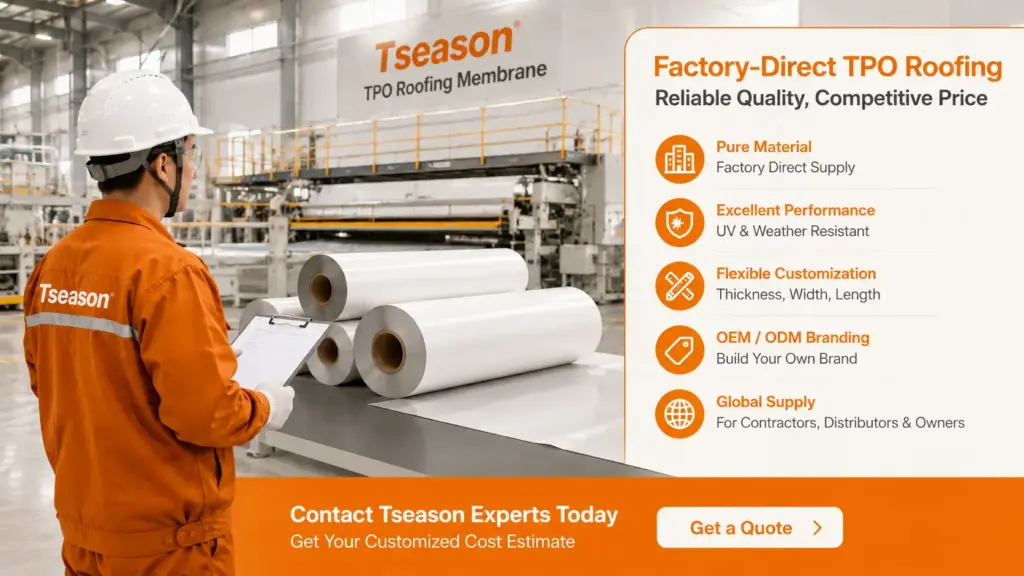
Tseason focuses on TPO waterproof membrane, which can provide product selections tailored to the roof structure, climatic conditions and construction methods of different construction projects, and support the matching of different thicknesses, reinforcement options and specifications. Tseason conducts quality control from raw materials, production process to finished products to ensure stable performance and TPO membrane products suitable for long-term roofing systems. At the same time, we can provide technical communication and product selection support according to project needs to help you achieve a more reasonable balance between performance, construction requirements and overall project costs.
If you are selecting the right TPO waterproofing membrane, please feel free to contact Tseason to receive product recommendations and selection guidance best suited to your project’s needs.
FAQs
- How should flat roof materials be selected for roofs with HVAC or other rooftop equipment?
The selection should account for both the equipment environment and the maintenance activity associated with it. Frequent service access can increase foot traffic and the risk of punctures, tears, and abrasion, so membrane mechanical properties and protection measures such as dedicated walkways may need to be considered. The membrane should also be evaluated for compatibility with any chemicals or contaminants that may be present around the equipment.
- Both TPO and PVC are thermoplastic single-ply membranes. Why do they exhibit fundamentally different degradation mechanisms under long-term outdoor weathering?
Unplasticized PVC is inherently a rigid polymer; it requires the addition of plasticizers to achieve the flexibility necessary for roofing applications. Over time, exposure to solar UV radiation and thermal cycling causes these plasticizers to migrate to the surface and volatilize, leading to embrittlement, shrinkage, and surface cracking. Conversely, TPO is a polymer blend or reactor-copolymer of polypropylene and ethylene-propylene rubber. Because its flexibility is intrinsic to its molecular structure, TPO requires no chemical plasticizers, rendering it immune to plasticizer loss and offering superior long-term dimensional and physical stability under UV exposure.
- What areas should be prioritized during routine flat roof maintenance?
Routine inspections should not focus solely on the membrane surface. Particular attention should be given to seams, roof penetrations, drainage components, and areas exposed to frequent foot traffic or equipment activity. These locations are more susceptible to mechanical damage, contamination, or drainage-related issues. For commercial roofs requiring regular equipment maintenance, properly designated walkways can also help minimize accidental damage to the waterproofing layer.
- What factors should be evaluated before selecting a flat roof membrane?
The selection should consider more than membrane properties alone. Building type, roof slope, local wind and climate conditions, expected foot traffic, equipment placement, drainage, insulation, fastening method, and applicable building or fire codes can all influence the appropriate roofing system. The membrane should ultimately be selected as part of the complete roof assembly rather than as an isolated product.
- How does roof slope affect the choice of flat roof material?
Low-slope roofs rely heavily on the waterproofing system because water may drain more slowly than on steep-slope roofs. The selected membrane should therefore be compatible with the drainage design and capable of maintaining reliable seams and waterproofing performance over time. Areas prone to standing water may also require closer evaluation of substrate preparation, drainage, and system design.