The Comprehensive Guide to TPO Roofing: What is TPO Roofing, Pros & Cons
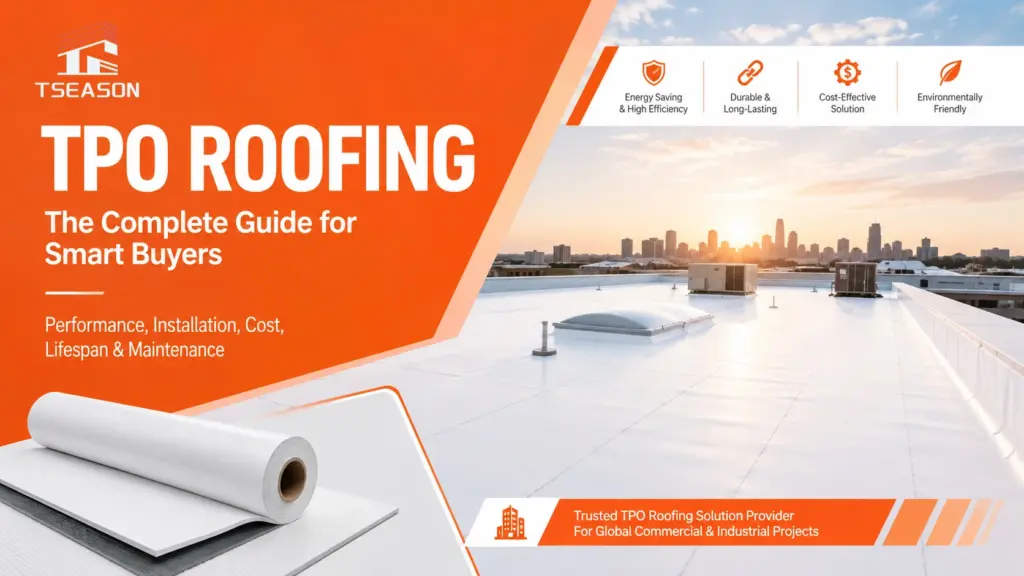
If the roof of your house has a gentle slope or a flat roof, and you are preparing to replace the roof, you are likely to have heard of TPO roof. Due to its energy-saving, high efficiency, durability and relatively affordable price, TPO roofing has become the most common roofing system at present and is a popular choice for commercial and industrial buildings. If you are considering installing TPO roofing material, it is important to clearly understand its performance before purchasing.
In this guide, we will explain to you what TPO is, the advantages and disadvantages of TPO roof system, installation method, cost, life expectancy and maintenance. At the same time, the guide will also explain how manufacturers like Tseason can help you simplify procurement, shorten the delivery cycle, and protect your profit margin. Continue reading this guide, and you will be able to make decisions more confidently.
TPO Roofing at a Glance: What You Need to Know Before You Buy
What is TPO: TPO, or thermoplastic polyolefin, is a single-ply roofing membrane that forms a continuous roof covering layer through heat-welded at the seam. It is one of the most common low-slope roofing systems in commercial and industrial buildings.
Typical thickness: 45–80 mil. 60 mil is the most common spec for commercial projects.
Lifespan: Typically 15-25 years
Best for: Low-slope commercial, industrial, cold-storage, cleanroom, and institutional buildings; retrofit and new construction.
Top benefits: Energy-efficient, easy to install, affordable, and recyclable
What Is TPO Roofing?
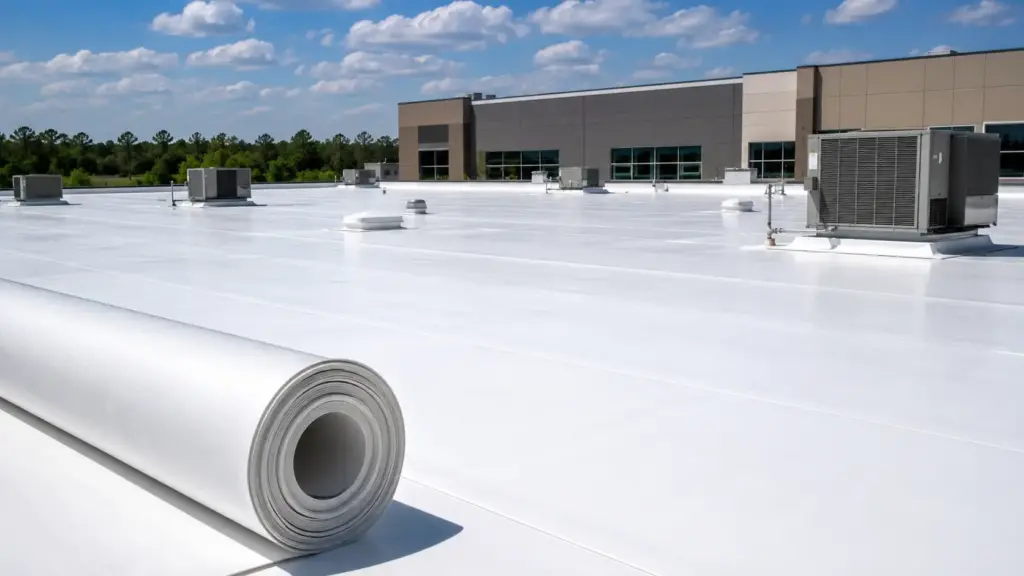
TPO waterproofing membrane is made of polymer blends and reinforced with polyester mesh, which has excellent strength and performance. On the low-slope roof, the single-ply waterproofing membrane is laid on the insulation board, and the seams are fused using hot-air welding to form a continuous waterproof layer. Because the cost of TPO materials is lower than that of EPDM and PVC, it is one of the most economical commercial roofing systems on the market at present.
Advantages of TPO Roofing
Although TPO roofing materials have only been on the market for a short time, they are becoming increasingly popular in the field of commercial building roofing. This is mainly because TPO waterproof membrane have a high solar reflectance, which can reduce the absorption of heat from the roof and significantly reduce the energy consumption of commercial facilities. At the same time, its price is much lower than that of other membrane roofs with equivalent performance, and it is very cost-effective. Other advantages also include providing building owners with the flexibility to choose the installation method according to specific needs. The TPO roof can be fixed by adhesive or directly installed on the base of the roof by mechanical fixation. In addition, TPO materials are chlorine-free and 100% recyclable, so they are very environmentally friendly and help reduce carbon emissions.
Limitations of TPO Roofing
TPO is also not without disadvantages. Since TPO is a relatively new material, its production process varies greatly. Therefore, the formula of TPO is still being improved, and the product quality of different manufacturers may be very different. In addition, long-term exposure to a high-temperature environment will lead to TPO membrane seam failure and premature aging.
How is TPO roofing installed?
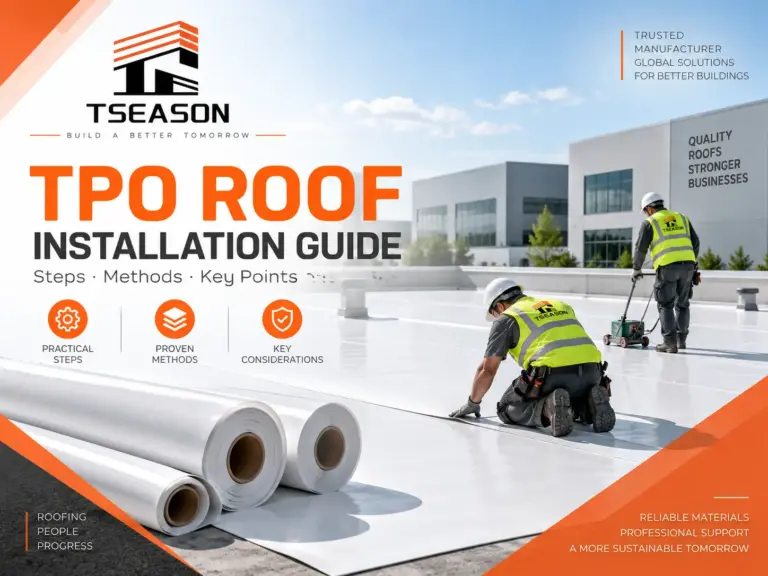
TPO roofing can adopt three main construction methods according to the roof structure, substrate conditions, and project requirements: mechanical fastening, full-adhesive bonding, and ballast. The mechanical fastening method fixes the membrane on the substrate through special fasteners and gaskets. The construction speed is fast and the economy is good. It is often used for large-area steel roofs of industrial buildings. The full-adhesive bonding uses adhesives to bond the membrane to the insulation layer or substrate. It has good integrity and wind resistance, which is more suitable for strong wind areas and low-slope concrete roof; The ballast method is to press the weight by using pressed stone or concrete slab after laying the membrane. The construction is relatively simple, but it will increase the roof load. At present, it is rarely used.
No matter which fixing method is used, membrane lap seams typically require hot-air welding to form a continuous waterproof layer. Before construction, it is necessary to focus on confirming the flatness of the substrate and the secure fastening of the insulation boards, and to properly control the overlap width of the membrane.
How Much Do TPO Roofs Cost?
The price of TPO roofing materials is usually about $0.50 to $1.50 per square foot, depending on many factors such as TPO thickness, roof area and construction method. For example, the unit material cost of the ballast system may be lower, but the construction cost of complex nodes and high-wear areas may be higher. For project-level procurement, direct procurement from the TPO factory can reduce the price increase of intermediaries and help further control material costs. In hot areas, the high solar reflection performance of the white TPO roof can reduce the cold load of the building. During the longer use cycle, its energy-saving benefits will yield long-term returns, making the long-term economy of the TPO roof system more prominent. At the same time, the quality of TPO will vary from manufacturer to manufacturer, and should fully understand the situation before making a decision.
Tseason offers factory-direct supply of TPO roofing membranes and project-specific customization services. Please contact us for product specifications, samples, and project quotes.
How Long Do TPO Roofs Last?
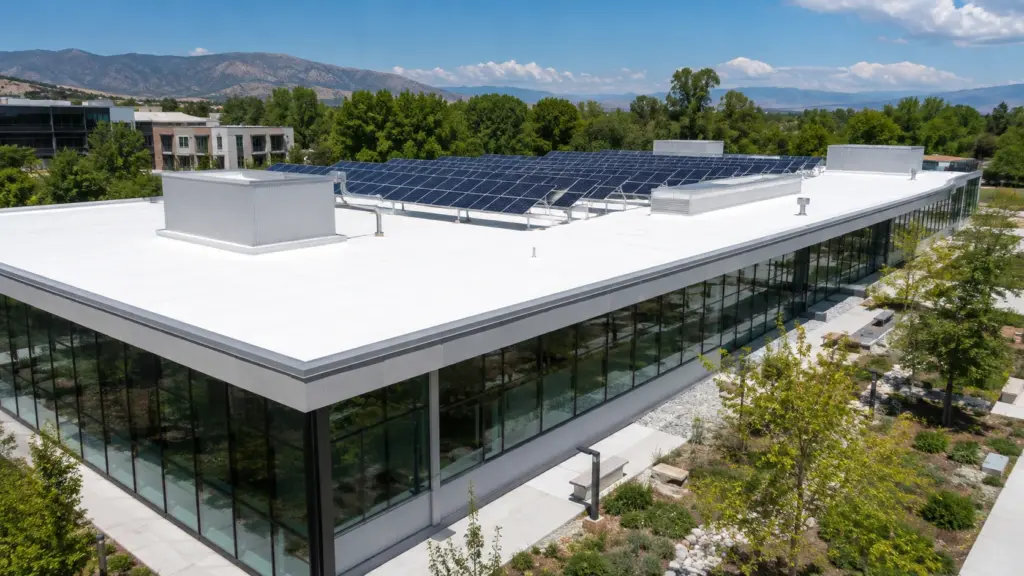
Under normal conditions, the average service life of TPO roof is about 15 to 25 years. But this is not the absolute limit. If high-quality materials are used, installed correctly and maintained regularly, TPO roofs can usually be used for 20 to 30 years or even longer before needing to be replaced. Since TPO roof materials became popular in the 1990s, we have only now seen some of the oldest TPO roofs reach the end of their service life. And through the continuous optimization and improvement of the formula, today's TPO products have stronger durability and weather resistance.
TPO Roof Inspection & Maintenance
The best way to avoid problems with the TPO roof is to check and maintain it regularly. Roof inspection is an indispensable part of any maintenance plan, and it can also effectively extend the service life of TPO. Roof inspection usually includes the condition of the seam and the water plate, the saturation of the insulation layer, the condition of the roof plate, etc. At the same time, inspection should be carried out as soon as possible after bad weather and roof maintenance work. Maintenance should include keeping the roof clean, ensuring that the gutters and drainage pipes are unobstructed, and repairing any small holes or loose seams in time.
Why Choose Tseason as Your TPO Roofing Manufacturer & Supplier
If you are looking for a robust, durable, energy-efficient and economical flat roof or low-slope roof solution, the TPO roofing system is worth your serious consideration. When choosing a TPO roof membrane supplier, price is only one of the considerations. Product quality, technical support and delivery capacity also determine the final effect of the project.
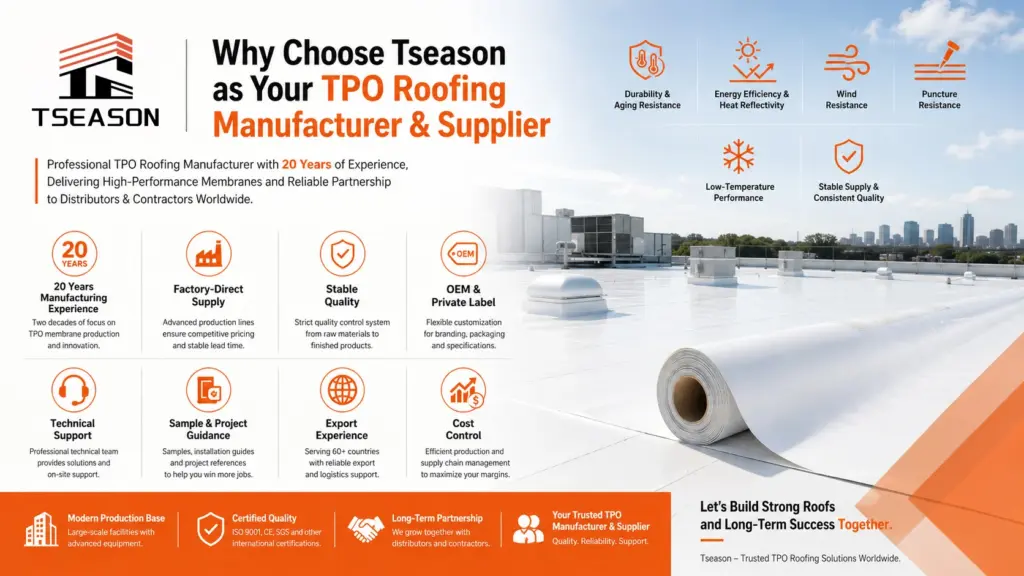
As a manufacturer with 20 years of manufacturing experience, Tseason adopts the factory-direct supply model. You can directly connect with the production and technical teams, reduce the price increase and communication links of intermediaries, and obtain a more stable supply while controlling material costs. Our TPO membrane material has excellent aging resistance and excellent wind resistance, impact resistance, puncture resistance, and good performance at low temperatures. For distributors, contractors and building materials brands, Tseason also supports OEM and private-label manufacturing to help customers establish their own TPO product lines, and can provide samples, technical information and installation guidance according to project needs. Tseason has mature export experience. Whether you need small flat roof installation or large commercial roof replacement, Tseason can deliver in good faith.
At Tseason, we are committed to helping customers choose the roof system that best suits their needs. From evaluation and pricing to installation and long-term support, we will serve you wholeheartedly.
FAQs
- What slope does a TPO roof need?
TPO single-ply roofing membranes are primarily suitable for low-slope and flat roof systems. According to building codes, the minimum design slope for TPO roofs is typically recommended to be 1/4:12, or approximately 2 percent, to ensure proper drainage from the substrate and prevent prolonged water accumulation. If the slope is less than this standard, standing water may accelerate the aging of the membrane’s welded seams and increase the risk of leaks.
- Can hail damage a TPO roofing?
Yes, but its resistance to hail depends on the thickness and flexibility of the TPO membrane, the hardness of the underlying insulation board, and the size and impact force of the hailstones. Traditional TPO membranes may suffer punctures or cracks when exposed to large hailstones or extremely low temperatures; however, high-quality TPO membranes featuring a polyester mesh reinforcement layer and thicker gauges, such as 60 mil or 80 mil, offer excellent impact and puncture resistance, significantly reducing the risk of hail damage.
- How does TPO compare to EPDM and PVC in commercial roofing?
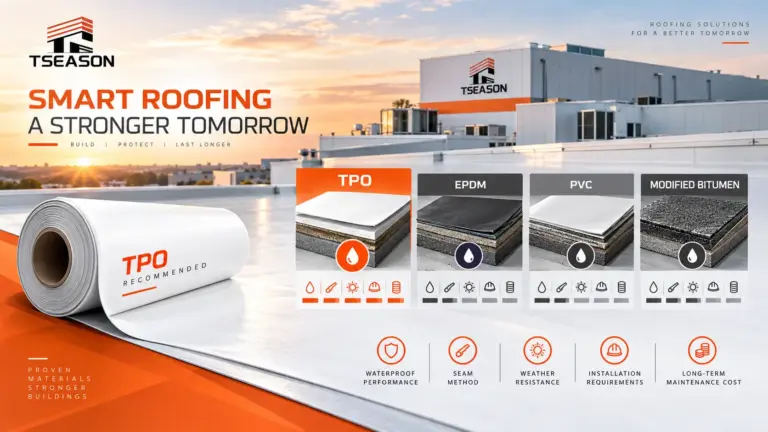
Compared to EPDM: TPO is installed using hot-air welding, while EPDM is typically installed with adhesive or tape. Additionally, white TPO has extremely high solar reflectance, making it more energy-efficient than black EPDM.
Compared to PVC: Both TPO and PVC are installed using hot-air welding and have high reflectance, but TPO formulations do not contain plasticizers or chlorine, making them more environmentally friendly. Furthermore, the material procurement cost for TPO is typically lower than that for PVC.
- What are the primary thickness options for TPO membranes, and how do I choose?
Common thickness specifications for TPO membranes are 45 mil, 60 mil, and 80 mil. The 45-mil option is an economical choice, suitable for temporary or transitional structures with limited budgets or shorter expected service lives. 60 mil is the most standard specification for commercial and industrial projects, offering a balance of excellent durability and value. 80 mil provides the highest levels of puncture resistance, weather resistance, and hail resistance, making it suitable for areas with harsh climates, buildings with heavy foot traffic, or structures requiring a long service life.
- What is the average lifespan of a TPO roof, and how can it be maximized?
Under normal use and maintenance, the average lifespan of a TPO roof is typically 15 to 25 years; with high-quality materials and proper installation, it can reach 20 to 30 years. To maximize the roof’s lifespan, choose a reputable brand and an appropriate thickness; have a professional team perform standard hot-air welding and properly handle detailed joints; and conduct regular inspections at least twice a year, promptly clearing drainage channels and repairing minor damage, especially after heavy rain, hail, or strong winds.