How to Protect Workers in High-Risk Industrial Environments Introduction
In high-risk industrial environments such as petrochemical, energy manufacturing, metal processing and battery production, workers face a variety of potential dangers every day, including fire, high temperature, chemical exposure, mechanical injury and safety challenges caused by extreme operating conditions. A sudden accident may not only cause personal injury, but also cause equipment damage, production interruption and even more serious consequences. Therefore, reliable protective measures are crucial. Effective safety strategies require the establishment of a protection system at multiple levels: PPE is used to reduce the risk of personnel's direct exposure to danger; fire prevention building design provides a safer working environment for personnel by limiting the spread of fire and improving building tolerance; engineering control and production management measures by optimizing the layout of the factory, reducing the source of risk and improving the emergency mechanism, the possibility of accidents can be reduced from the source.
This article will introduce how to establish a comprehensive personnel protection system in a high-risk industrial environment and improve the safety of the overall working environment from the three aspects of personal protection, building protection and engineering management.
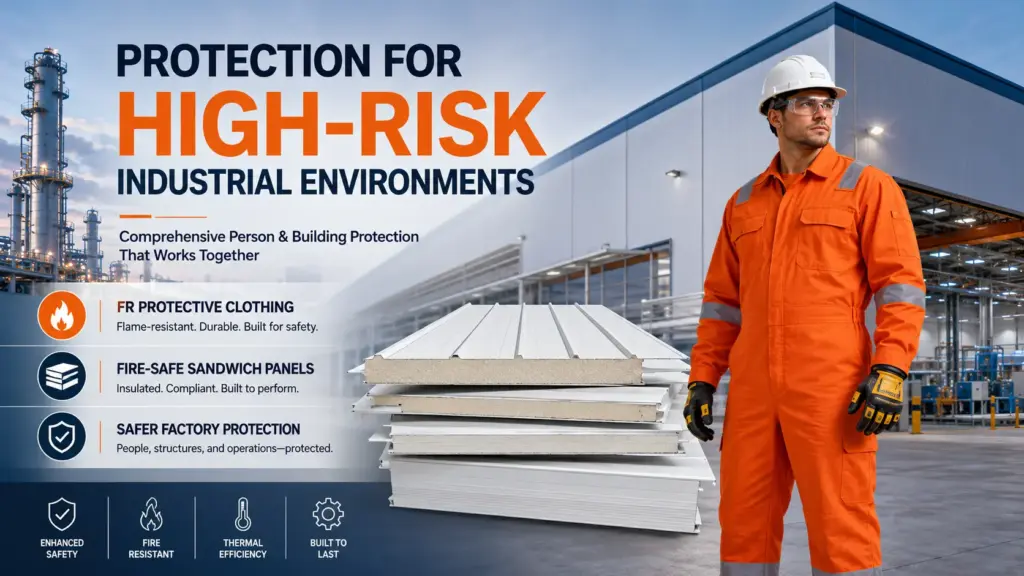
FR Clothing: The First Line of Defense for Workers
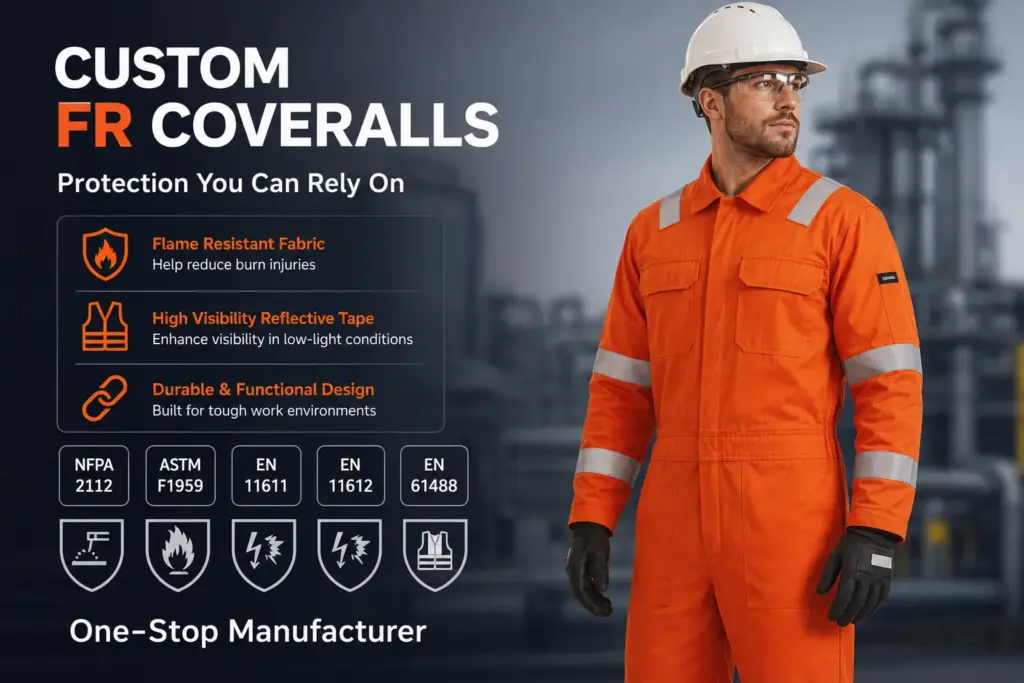
In a high-risk industrial environment, workers face open flames and high temperatures every day. For example, the risk of sudden fires in industries such as oil and gas extraction, chemical manufacturing, metal processing, welding and power generation is high. In such cases, ordinary work clothes not only fail to provide effective protection, but may even increase the risk of injury due to continuous combustion due to fire, melting or adhesion to the skin.
FR clothing is a personal protective equipment, which can effectively reduce the risk of workers being injured by flames and heat energy. Unlike ordinary work clothes, the certified flame-retardant fabric of flame-retardant work clothes is not easy to ignite. Even if it ignites, the spread of flames will stop quickly after removing the ignition source. This fabric can also slow down the speed of heat transfer to the skin, and gain more time for personnel to evacuate dangerous areas and rescuers to dispose of it on the spot.
How FR Clothing Protects Workers in High-Risk Industries
- Reduce the injury caused by instantaneous flames: In sudden accidents such as flash combustion, workers may only be exposed to high-temperature environments for a very short time. Flame-retardant clothing can reduce the possibility of rapid combustion, limit the spread of flames, and reduce the risk of skin burns.
- Reduce the impact of thermal radiation: In addition to direct contact with flames, thermal radiation in a high-temperature environment will also cause harm to the human body. Flame-retardant materials have certain thermal insulation properties, which can reduce the actual heat absorbed by the human body and reduce the damage of thermal radiation to the human body.
- Reduce the risk of secondary injury: Ordinary synthetic fiber workwear may adhere to the skin after melting at high temperature, causing more serious injury. The special fibers used in fr clothing are not easy to melt and do not adhere to the skin at high temperatures, which can effectively avoid such risks and provide reliable protection.
Looking for reliable flame-resistant clothing manufacturer? Contact XinKe to explore suitable FR clothing solutions for your working environment.
Fire-Resistant Building Design: The Second Layer of Industrial Safety
FR clothing can provide direct protection for personnel in flame and high-temperature environments, but personal protective equipment cannot solve all industrial safety problems. When a fire occurs, the consequences of the accident are not only related to the protective equipment of the personnel, but also closely related to the fire protection performance of the building structure. Whether the wall is flame-retardant and whether the structure can limit the spread of fire and heat transfer will directly affect the development of the disaster. In high-risk industrial sites, the fire prevention capacity of the building system is as important as personal protection. Reasonable selection of building materials and design of fire protection systems can slow down the spread of fires, reduce the damage to building structures, and gain more time for personnel evacuation and fire rescue.
Fire-Resistant Building Systems for Industrial Facilities
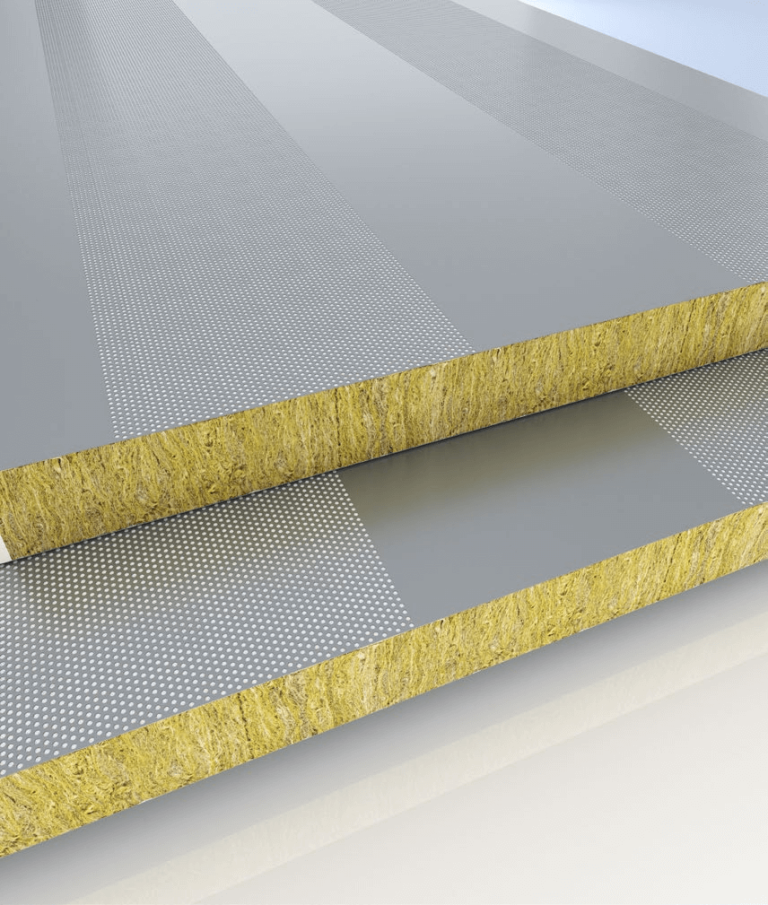
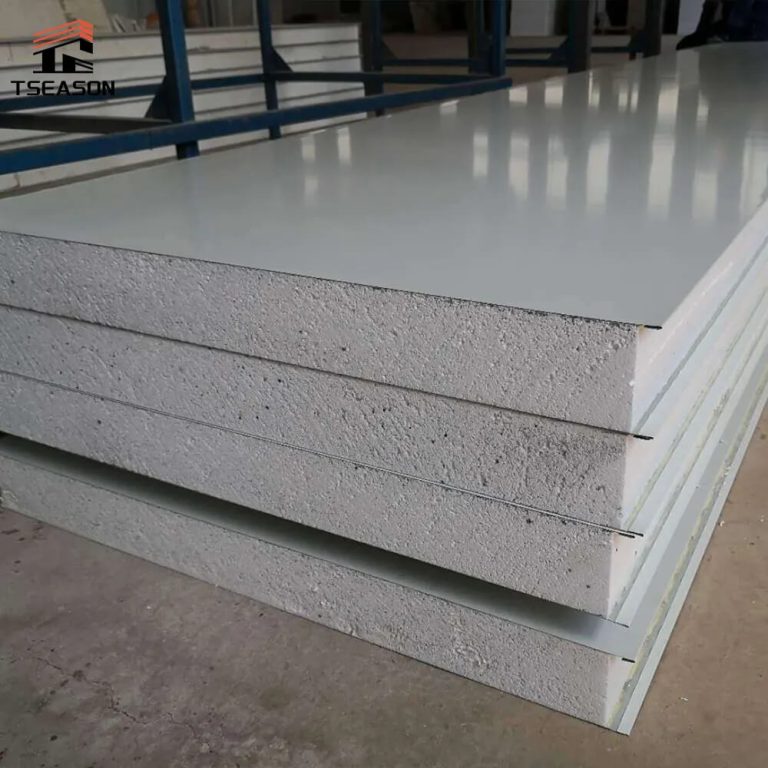
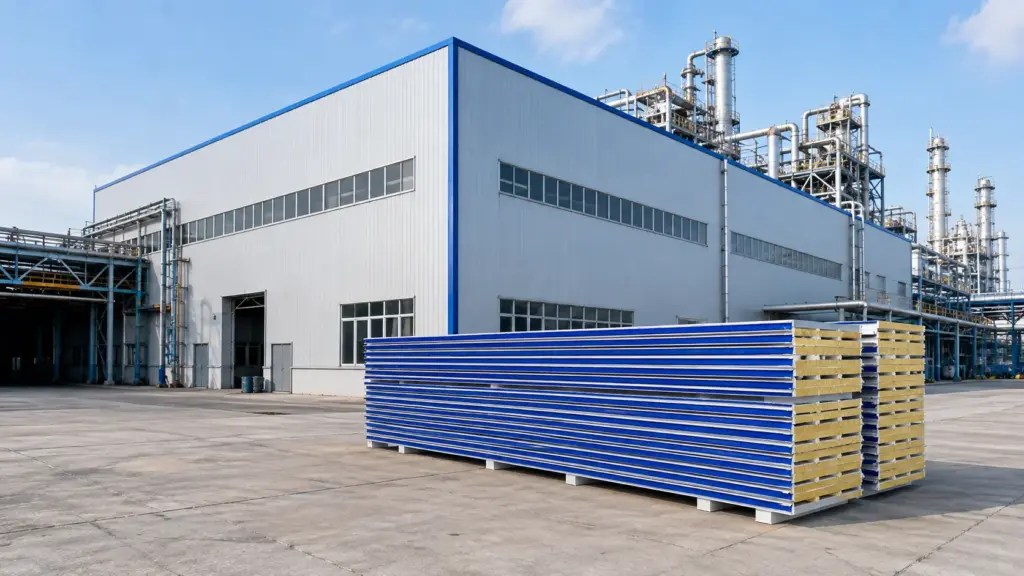
The rock wool sandwich panel is made of non-combustible mineral cotton as the core material, which is an A-grade non-combustible material with outstanding fire resistance and thermal insulation ability, and is widely used in the fire protection system of industrial buildings. In the event of a fire, the rock wool core will not burn, which can slow down the spread of flames along the board, while reducing the heat transfer to the interior of the building and gaining more time for personnel evacuation and fire rescue. Rock wool sandwich panel also has the function of insulation. Its low thermal conductivity can reduce the impact of external temperature fluctuations on the interior of the factory, keep the indoor environmental temperature stable, and reduce the energy consumption of building operation.
Applications of Fire-Resistant Building Materials
Fireproof building materials are often used in industrial places with high safety requirements, such as:
Chemical Plants: A large number of flammable and explosive substances are involved in the chemical production process, and the requirements for fire prevention are relatively strict.
Energy Facilities: Energy facilities usually include high-temperature equipment and complex production systems, and have high requirements for building fire resistance.
Manufacturing Workshops: Metal processing, machinery manufacturing and other operations will produce sparks and high temperatures, which require reliable building protection.
Warehouses and Storage Facilities: The storage area is dense with goods, and it is easy to spread rapidly after a fire. The focus of building fire prevention design is to control the spread of the fire and protect the safety of inventory and personnel.
Engineering Controls: Reducing Risks Before Accidents Occur
Personal protective equipment and fire protection construction systems can reduce personnel injuries and property losses in the event of accidents, but a more perfect industrial safety system also needs to be controlled from the source of risk. In the planning stage of the factory, it is necessary to identify potential sources of danger and make reasonable layouts. Through regional division, the operation areas of different risk levels should be physically isolated, and the corresponding safety management procedures should be supported, so as to reduce the superposition of risk factors and reduce the probability of accidents.
Industrial Layout and Risk Separation
The layout design of industrial facilities directly affects the effectiveness of engineering safety control. Different production areas usually have different risk levels. When planning, it is necessary to combine the production process, risk factors and equipment characteristics. Welding areas, chemical storage areas, battery production areas, etc. are high-risk areas, involving open flames, high temperatures, flammable substances or hazardous chemicals, and must be physically isolated from low-risk areas. Specific practices include setting safe distances, dividing fire prevention zones, and setting up independent operating areas to limit the scope of accidents. Personnel movement lines and material transportation routes also need to be planned overall, and cross-crossing high-risk areas should be avoided. At the same time, separating dangerous processes from ordinary assembly, packaging and office areas can reduce the risk of exposure of personnel to dangerous environments.
Fire Safety Systems and Emergency Management
In addition to the layout of the factory, a perfect fire protection system and emergency management measures are also very important. In the event of an accident, timely response to the accident is essential. Industrial facilities need to be equipped with fire detection systems, automatic sprinklers, emergency lighting and evacuation passages. At the same time, safety training and emergency drills should be carried out regularly to exercise employees' ability to respond to emergencies and control the impact of accidents. Only by combining engineering design and daily safety management can we form a complete risk control chain from prevention at the source to disposal after the fact.
Building a Comprehensive Safety Strategy for High-Risk Industrial Environments
A single safety measure is far from enough to protect workers in high-risk industrial environments. A reliable security strategy should combine personal protection, building protection and engineering control, cooperate with multiple factors to deal with risks, and jointly complete the safety protection plan for high-risk industrial environments. FR clothing can reduce the impact of direct contact with flames and high temperatures, providing the first layer of protection. The fire-resistant building system helps to control the spread of fire, improve the fire prevention performance of the building, and create conditions for the evacuation and emergency response of staff. Engineering control measures are preventive measures to reduce the probability of accidents through facility layout planning, risk area isolation and emergency management system. All three levels are crucial.
Enhance Industrial Safety with Tseason Fire-Resistant Sandwich Panels
Tseason is a professional sandwich panel manufacturer with nearly 30 years of rich experience. We have been working hard and know that a safe industrial environment requires a reliable construction system specially designed for harsh application scenarios. Tseason holds ISO9001, ISO14001, CE, SGS, FM, GOST and other authoritative certifications to ensure the consistency of product quality. Our rock wool board meets the A-level non-combustible standard, which can provide excellent fireproof performance, thermal insulation performance and structural performance for industrial facilities, warehouses and other special buildings. Whether you plan to build new industrial facilities or upgrade existing buildings, our team can provide suitable sandwich panel solutions according to your project needs.
If you are looking for a suitable sandwich panel and a reliable manufacturer, welcome to contact us and request product information or samples for evaluation.
FAQs
- How does flame-resistant workwear protect workers during an industrial fire?
Flame-resistant workwear is designed to reduce the impact of short-term exposure to flames and high temperatures. Certified FR fabrics are difficult to ignite and can limit flame propagation after the ignition source is removed. They can also slow heat transfer and reduce the risk of molten synthetic fibers adhering to the skin, giving workers additional time to leave a dangerous area.
- Why are rock wool sandwich panels suitable for high-risk industrial buildings?
Rock wool sandwich panels use non-combustible mineral wool as the core material and can provide strong fire resistance and thermal insulation. During a fire, the rock wool core does not burn, helping limit flame spread through the panel and reduce heat transfer into the building. This can provide additional time for personnel evacuation and emergency response.
- Why should high-risk production areas be physically separated from low-risk areas?
Different production areas can have significantly different levels and types of hazards. Physically separating high-risk operations such as welding, chemical storage, and battery production can prevent hazards from spreading to lower-risk areas. Measures such as safe distances, fire compartments, and independent operating zones can also reduce the possibility that multiple risk factors will overlap during an accident.
- How does industrial facility layout contribute to worker safety?
Industrial layout can reduce worker exposure to hazards before an accident occurs. Production processes, equipment, risk levels, personnel movement, and material transportation routes should be considered together during planning. Separating hazardous processes from assembly, packaging, and office areas while avoiding unnecessary crossings between people and material routes can reduce exposure to dangerous environments.
- What engineering controls can help reduce risks in high-risk industrial environments?
Engineering controls can include risk-area separation, safe-distance planning, fire compartments, independent operating areas, fire detection systems, automatic sprinklers, emergency lighting, and clearly planned evacuation passages. These measures aim to control hazards at the facility level rather than relying solely on individual workers to respond after an incident occurs.
- How can manufacturers improve fire safety when building or upgrading a high-risk industrial facility?
Manufacturers should evaluate the hazards associated with production processes, equipment, materials, and facility layout before selecting protection measures. A comprehensive approach may combine FR PPE, non-combustible building materials such as rock wool sandwich panels, risk-based zoning, fire detection and suppression systems, emergency evacuation planning, employee training, and regular emergency drills. The specific building system should ultimately be selected according to the project's risk profile and requirements.