How to Protect Sandwich Panels During Manufacturing, Transportation and Installation
A sandwich panel can leave the production line with a clean, consistent finish and still arrive on site with scratches, pressure marks or adhesive problems. The damage often comes from ordinary contact: a dirty roller, metal filings after cutting, panels sliding inside a pack, the wrong lifting gear or protective film left in the sun for too long.
You can reduce these problems with four linked controls:
- match the temporary film to the actual metal facing and production process;
- keep handling and packing surfaces clean, soft and stable;
- store panel packs on dry, level supports; and
- inspect and remove the film at planned stages instead of waiting blindly until final handover.
Protective film helps, but it is not a complete packaging or handling system. A sound sandwich panel protection plan should cover the full route from the forming line to the completed wall or roof.
Why Surface Protection Matters for Sandwich Panels
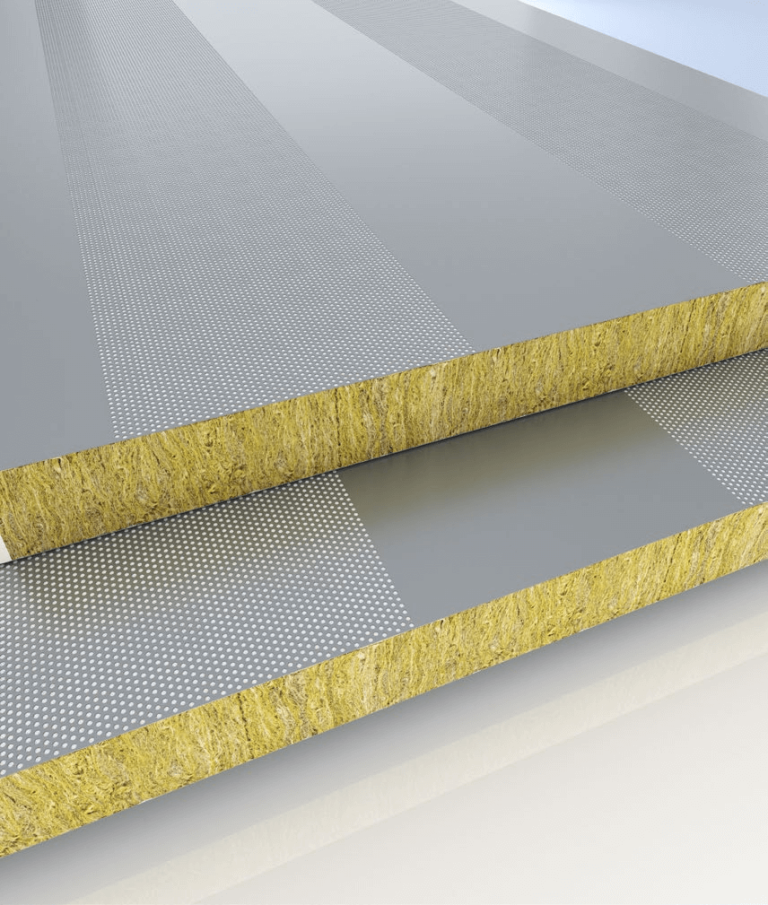
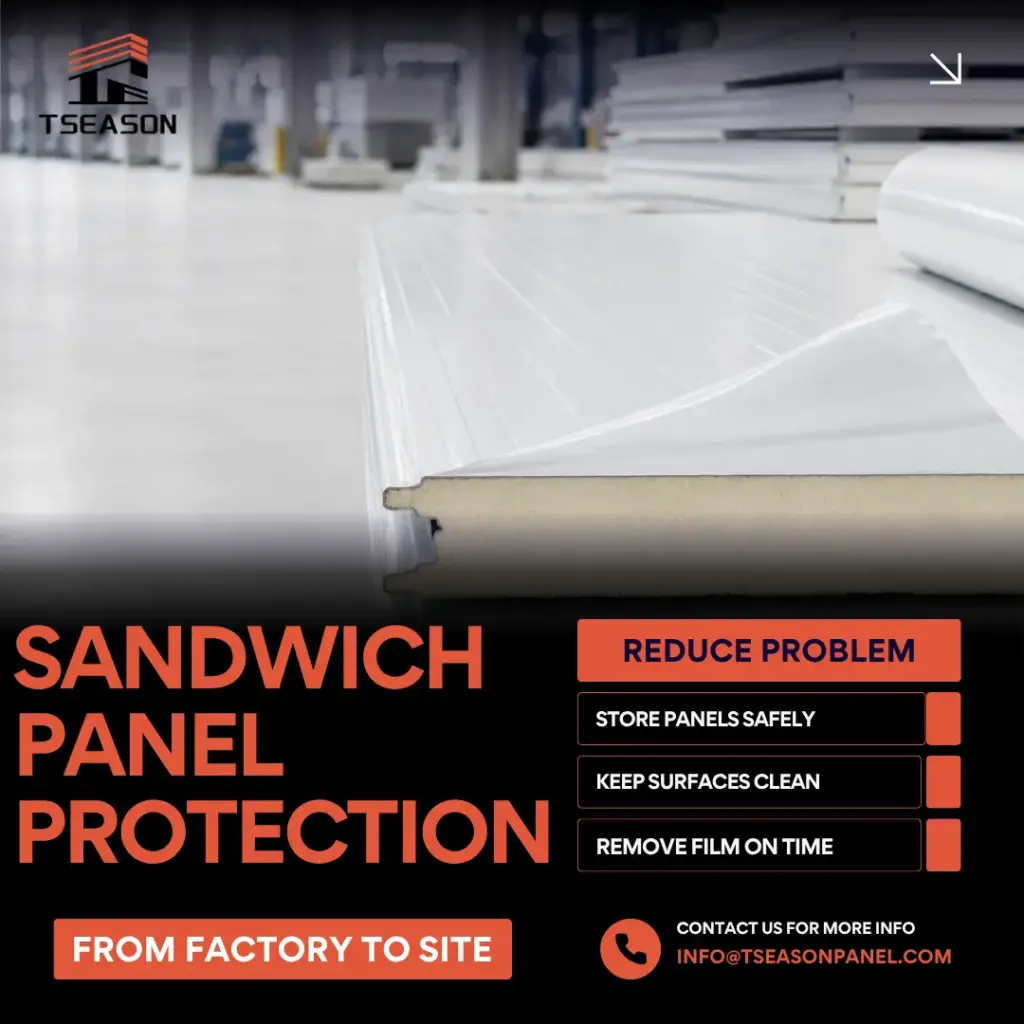
The exposed face of an insulated sandwich panel is part of the finished building. On many panel systems, that face is pre-painted or color-coated steel. Depending on the panel specification, an inner face may use another coated surface or foil. Before you choose any protection method, confirm the exact facing, paint system, gloss or texture, and which side will remain visible.
A small mark can create a larger project problem when it appears across a prominent facade, hygienic interior or cleanroom wall. Your customer may request cleaning, touch-up, closer inspection, replacement or an explanation of where the damage occurred. Each response adds labor and can interrupt the installation sequence.
Temporary film adds a sacrificial layer between the finished surface and normal production or handling contact. If you need to compare the information available from a film supplier, Plashield's protective film for metal panels page is one relevant specification resource. The link does not mean that one film suits every Tseason panel. You still need to match and test the film on the actual coating and process.
Protective Film During Panel Manufacturing
A typical protected production route starts with pre-painted coil or sheet. Where film is specified, it is laminated to the finished surface before the metal passes through profiling, cutting and panel assembly. The exact sequence depends on the line and panel design.
The film has to cope with more than flat-sheet storage. It may pass over guides and through multiple rollers, then remain attached while the profile changes shape. If tack is too low, an edge may lift or the film may shift. If the film is too weak, it may stretch or tear. If the adhesive and paint are incompatible, removal may change the gloss, leave residue or stress the coating.
Clean equipment matters just as much as the film specification. A film cannot safely absorb unlimited dirt or sharp debris. Metal filings trapped at a roller, guide or stacking point can press through the temporary layer and mark the finish underneath.
Before regular production, run the film through the real process and check:
- application is smooth, without trapped debris, wrinkles or bubbles;
- edges remain stable through profiling and cutting;
- the film does not interfere with dimensions, joints or downstream bonding;
- removal force remains acceptable after representative storage and exposure;
- the surface shows no unacceptable residue, gloss change, discoloration or coating lift; and
- operators can remove the film without tearing it into excessive fragments.
Do not approve a film from a flat coupon test alone when it will later pass through a forming line. The production trial is where you learn whether the film, coating and machine conditions work together.
Protecting Panels During Transportation and Storage
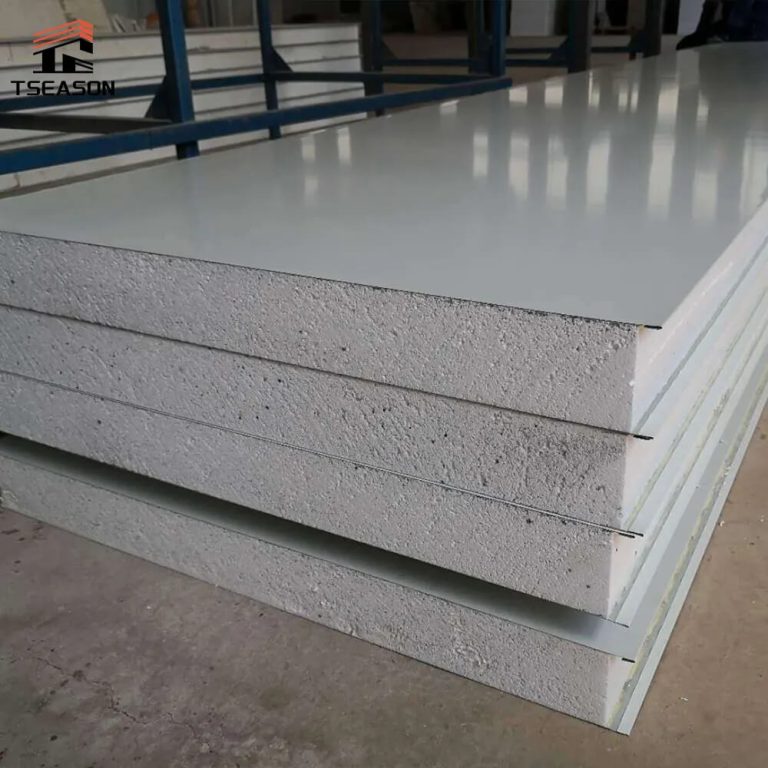
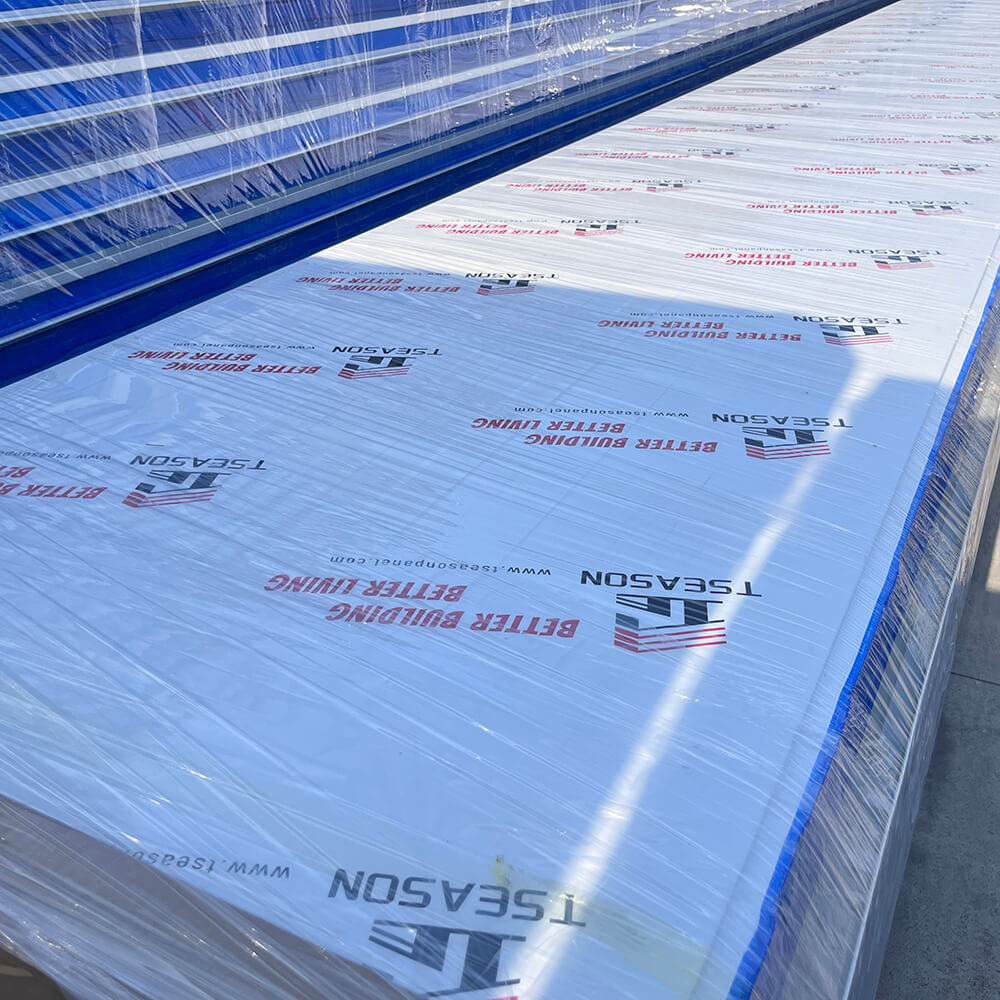
Once the panels are packed, the main risks change. Vibration can create rubbing between faces. Forks, hooks and chains can damage edges. Dirt on spacers can become an abrasive contact point. Rain entering a damaged pack can create a separate moisture problem that the surface film was never designed to solve.
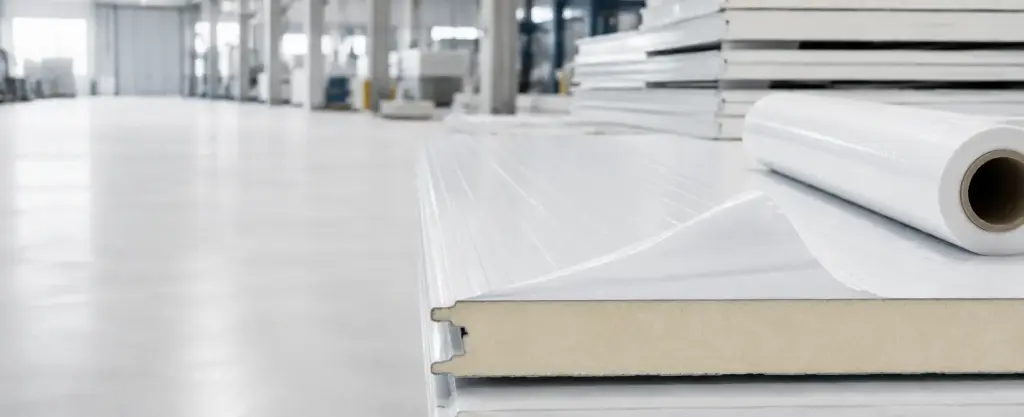
For insulated sandwich panels, temporary film provides an additional barrier during handling and transportation. It can help preserve the original surface condition until the relevant installation stage, but only when the pack is also supported, restrained and kept appropriately dry.
Use clean, compatible separators and edge protection. Lift packs with padded slings or other approved equipment, and never drag one panel across another. Support packs on level bearers arranged to avoid distortion. Secure the load against movement without crushing the panel edges. At temporary storage locations, follow the supplied panel instructions for cover, ventilation, stack geometry and maximum storage time.
| Stage | Main surface risk | Control you should specify | Release check |
|---|---|---|---|
| After production | swarf, film lifting, pressure marks | clean line and packs; remove filings; inspect film edges | photograph representative faces and pack condition |
| Loading | fork, sling or edge damage | approved lifting points, padded contact and edge protection | inspect corners, top sheets and straps before departure |
| Transport | sliding, vibration and weather entry | stable support, suitable restraint and intact packaging | record any shifted, wet or torn pack on arrival |
| Site storage | standing water, dirty supports and prolonged heat or sun | dry level supports, suitable cover and a defined installation queue | check film condition and exposure time before issue to installers |
| Installation | tools, sealant, cutting debris and incorrect film removal | protected work zone, staged removal and immediate cleanup | inspect each completed area before access moves on |
The receiving inspection is important. If a pack arrives wet, shifted, punctured or visibly damaged, record it before unpacking. Photographs should show the pack identity and the affected area. That evidence makes it easier to separate a transport issue from a production or installation issue.
Installation Protection for Construction Projects
The site introduces new hazards: lifting equipment, drills, cutting tools, sealants, dust and nearby trades. Keep the immediate work area clean and prevent loose metal debris from remaining on the panel. Tseason’s installation guidance also advises installers not to drag panels and to remove metal filings promptly.
Do not use one universal rule such as “leave all film on until project handover.” Some joints, fasteners, sealant lines or suction lifting methods require direct access to the panel face. Film trapped in a joint or under a seal can create a defect. A suction lifter may also require an approved bare contact area.
Instead, define a staged removal plan before installation begins:
- read the supplied panel and film instructions together;
- identify areas where film must be peeled back or removed before lifting, joining, fastening or sealing;
- keep permitted coverage on exposed faces only for the approved period and conditions;
- inspect each completed wall or roof area, then remove the remaining film promptly within the stated window; and
- record residue, coating change or unusual peel force before continuing across the project.
Outdoor exposure deserves special attention. Heat and sunlight can change adhesive behavior. A film described as UV resistant is still grade-specific and time-limited. Do not assume it can remain on the panel indefinitely, and do not start the exposure clock at installation if the film has already spent time in production, transport or storage.
Surface protection also needs to fit the panel design. When you compare sandwich panel building systems, send Tseason the project location, panel application, facing and finish, installation method, storage plan and schedule. This lets the panel discussion include packaging, unloading and installation requirements rather than treating surface condition as a late-stage issue.
Choosing the Right Protective Film for Metal Panels
Film thickness is easy to compare, but it is not the first selection question. Begin with the surface and the process.
1. Confirm the panel-facing specification
Tell the film supplier whether the surface is pre-painted galvanized or aluminum-zinc coated steel, another coated metal, or a foil-faced inner surface. Include the paint system if known, such as PE, SMP or PVDF, plus the gloss level, texture and color. A smooth high-gloss coating and a matte or embossed finish may need different adhesion behavior.
2. Treat thickness as one part of the specification
Plashield lists a typical total thickness range of 0.03 to 0.10 mm, or 30 to 100 micrometres, for its color-coated protective-film family. You may therefore see quote options such as 30, 50 or 80 micrometres. A higher number does not automatically mean a better result. Formability, tensile behavior, adhesive coat, surface contact and removal performance also matter.
Ask each supplier whether the quoted number is total film thickness and what tolerance applies. Otherwise, two apparently similar quotations may not describe the same construction.
3. Match adhesion to forming and removal
You need enough adhesion for the film to stay in place through lamination, profiling, handling and the intended storage period. At the same time, the film must remove within the agreed force range without unacceptable surface change.
Plashield states that its PE film uses an acrylic pressure-sensitive adhesive and that adhesion can be matched to PE, SMP and PVDF paint systems. You can review the supplier’s listed options on the Plashield color-coated protective film page, then request a sample matched to your coating and line. Treat the page as the starting specification, not final compatibility approval.
4. Define the exposure window
Tell the supplier how long the film may remain applied, including factory storage, ocean or road transit, site storage and installation. Include expected temperature, direct sunlight, humidity and season. If outdoor exposure is possible, obtain the exact UV grade and its written conditions.
Plashield lists UV-resistant grades with a supplier-stated range of 6 to 12 months depending on grade. That range should not be copied into a purchase order as a universal guarantee. Confirm which grade is quoted, how the period is measured and what removal conditions apply to your surface.
5. Run a representative sample test
Use production panels or coating coupons that represent the actual finish. Test immediate removal, removal after forming and removal after simulated or real aging. Inspect under consistent light and record peel behavior, residue, gloss or color change, edge lift and tearing.
A useful film request should include:
- panel-facing material and paint system;
- gloss, texture and color;
- forming, cutting and lamination conditions;
- panel profile and visible-face requirement;
- expected application-to-removal period;
- transport and storage route;
- outdoor UV and temperature exposure;
- preferred width, roll length and printing requirement; and
- your acceptance method for adhesion and clean removal.
This information gives the supplier a better basis for recommending a sample. It also makes quotations easier to compare than thickness and unit price alone.、
Final Quality Control Before Project Handover
Final inspection should not be the first time anyone looks closely at the surface. Build checkpoints into the process so that a problem is contained before hundreds of panels pass through the same condition.
At factory release, inspect representative panels and confirm that the film is intact. Before dispatch, record pack condition and identification. At delivery, note wet, torn or shifted packaging before unloading. Before installation, confirm that the exposure window has not been exceeded. After each installed area, remove film according to the approved sequence and inspect the face in suitable light.
Your handover check can then focus on the finished result:
- visible faces are acceptably clean and free from reportable dents or scratches;
- coating condition and color consistency meet the project acceptance criteria;
- panel alignment, joints, flashings and seals have been reviewed under the project quality plan;
- film, adhesive fragments, swarf and installation debris have been removed; and
- exceptions are photographed, identified and assigned for disposition.
If you are preparing a sandwich panel inquiry, ask Tseason to review the panel configuration together with your packaging, transport, storage and installation conditions. For the temporary-film component, send the coating and exposure information to Plashield or another qualified film supplier and request a representative sample before volume use.
Frequently Asked Questions
What does protective film do on a sandwich panel?
It provides a temporary sacrificial layer against normal contact, dust and light abrasion during defined production, handling and installation stages. It does not replace suitable packaging, moisture control, edge protection or correct lifting.
Should you keep the film on during installation?
Only where the panel and film instructions allow it. You may need to peel back or remove film at joints, fasteners, sealant lines or suction-lifter contact areas. Plan the sequence before installation rather than leaving all film until final handover.
When should protective film be removed?
Remove it within the supplier’s stated exposure window and according to the panel installation sequence. Check the total time since application, not just time on site. If removal force, residue or coating appearance changes, stop and investigate before continuing.
Is 30, 50 or 80 micrometres the best film thickness?
There is no universal best thickness. These are possible specification points within some product ranges, but the right choice also depends on the surface, adhesive, forming process, exposure and removal test.
Do you need UV-resistant film for outdoor projects?
You need a suitable UV-rated grade if the film may receive outdoor sunlight for a meaningful period. Confirm the exact grade, permitted conditions and removal deadline. UV resistance does not mean unlimited outdoor life.
How can you reduce adhesive-residue risk?
Match the adhesive to the real coating, apply the film to a clean surface, control exposure and remove it within the agreed window. Validate immediate and aged removal on representative panels before volume use.
How should sandwich panels be stored on site?
Follow the supplied panel instructions. As a general control, use clean, dry and level supports, protect packs from weather, avoid contaminated spacers and keep the installation queue short enough to stay within film and packaging limits.
What should you send with a panel-protection inquiry?
Send the panel type, facing and paint system, finish, profile, production process, quantity, route, storage duration, installation method, climate and expected removal date. Photos or coating samples can help the panel and film suppliers review the same conditions.
Final Thoughts
Reliable sandwich panel protection comes from a chain of small controls. A suitable temporary film can protect the visible face, but clean production, stable packing, dry storage, careful installation and planned removal determine whether that protection survives the full project route.
Define those controls before you order. Tseason can help you align the panel system with packaging, handling and installation requirements. A film supplier can then match and test the temporary protection against the confirmed coating and exposure. That division of responsibility gives you a clearer specification, a stronger inspection record and fewer surprises at handover.