Rock Wool vs Glass Wool Panel: Best Choice by Project
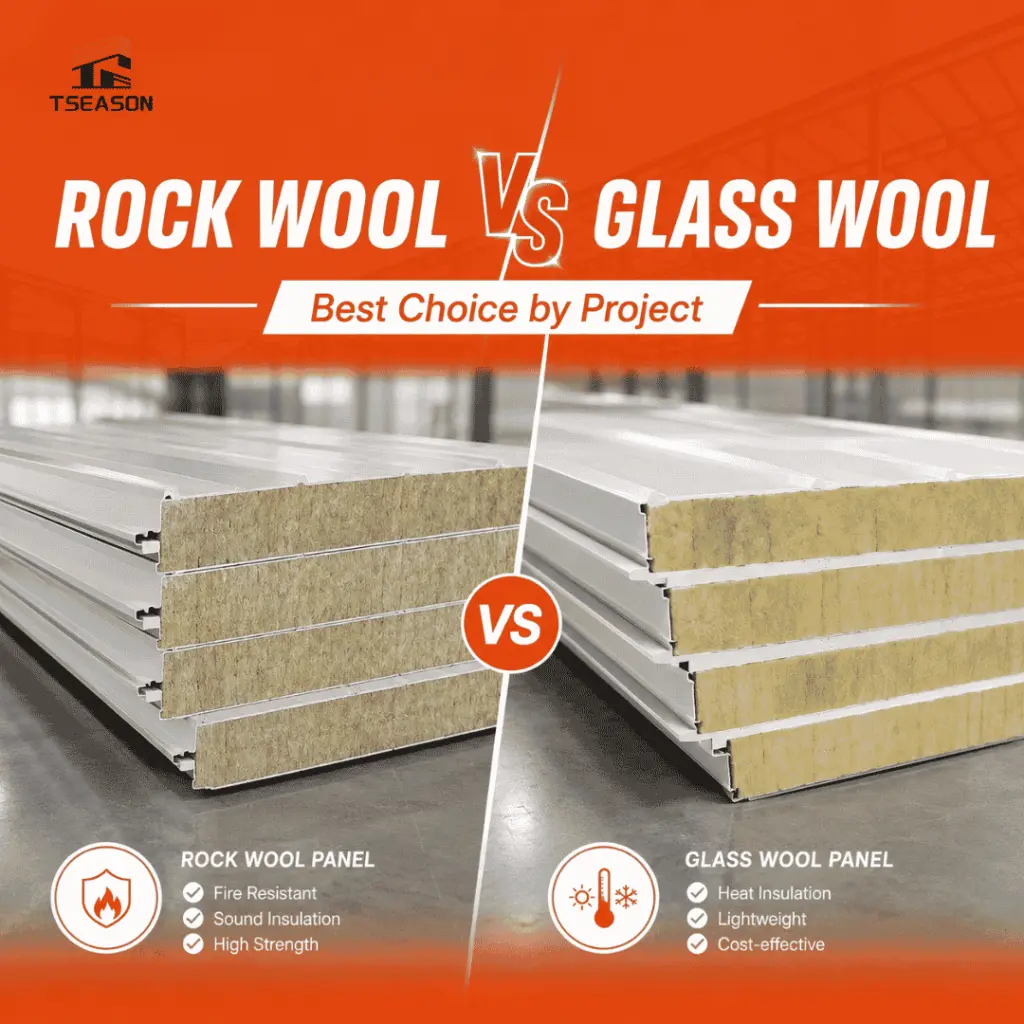
Glass wool and rock wool are materials used to improve various properties in construction sites. When choosing rock wool or glass wool panel, the key is not only to choose the material itself; for most building owners, designers and contractors, the key is to determine the most suitable type according to the actual needs and budget of the project.
This comparison guide aims to analyze the characteristics and performance of rock wool sandwich panels and glass wool sandwich panels. If you are evaluating these two plates for a new project, continuing to read will help you understand these two materials more deeply and help you choose the product that is more suitable for you.
Main Differences Between Glass Wool And Rock Wool
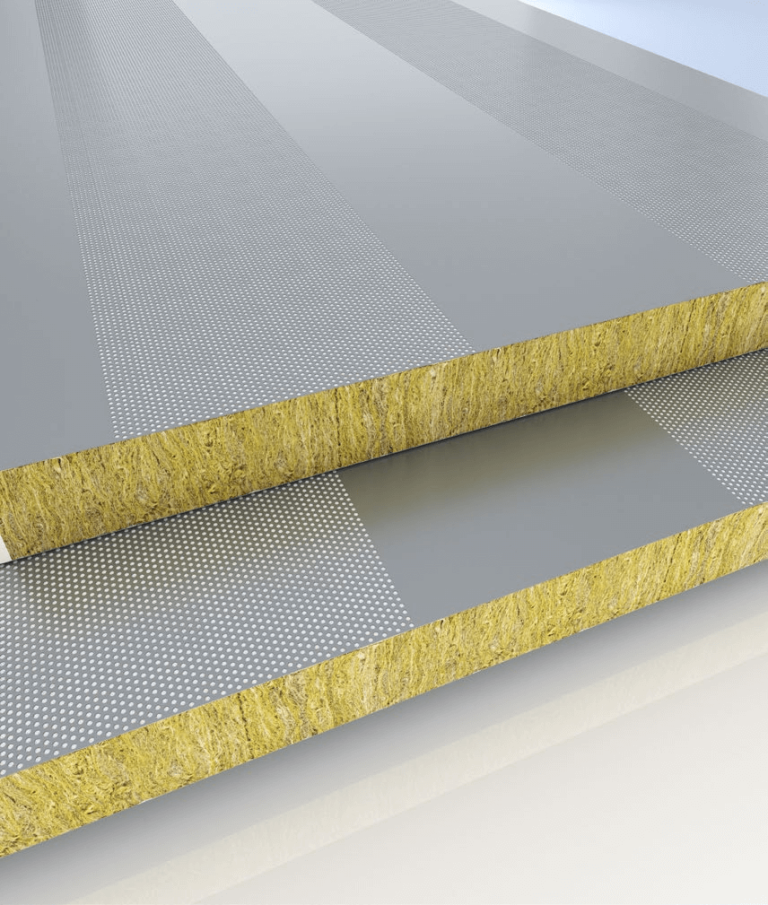
Rock wool is more expensive but offers greater safety and superior performance, featuring excellent fire resistance, high-temperature resistance, and thermal insulation properties. Rock wool sandwich panels are particularly suitable for industrial buildings, cleanrooms, cold storage facilities, roofs, and other applications with strict fire safety requirements.
Glass wool is less expensive, lighter in weight, and more flexible, while also offering excellent sound absorption and thermal insulation properties. It is suitable for commercial or residential buildings that require moderate performance and prioritize cost-effectiveness.
Rock Wool vs Glass Wool Panel: Direct Comparison
| Features | Rock Wool | Glass Wool |
| Production | Molten rock such as basalt | Recycled glass and sand. Contains no harmful chemicals |
| Cost | Higher, denser, higher raw material cost | More economical |
| Density | Higher | Lower |
| Weight | Heavier | Lighter |
| Fire Resistance | Non-combustible, excellent fire resistance, typically A1 non-combustible, greater heat resistance | Non-combustible, but not as high-temperature resistant as rock wool |
| Sound insulation | Excellent | Good |
| Compressive Strength | Higher, suitable for load-bearing applications like flat roofs | Lower, strength depends on the steel sheet |
| Thermal performance | Strong | Strong, often slightly better at equal density |
| Common applications | Industrial pipelines, boilers, kilns, exterior wall insulation, fire doors, roof systems | Building walls, ceilings, air conditioning ducts, conference rooms, recording studios |
Understanding Rock Wool Panel in Detail
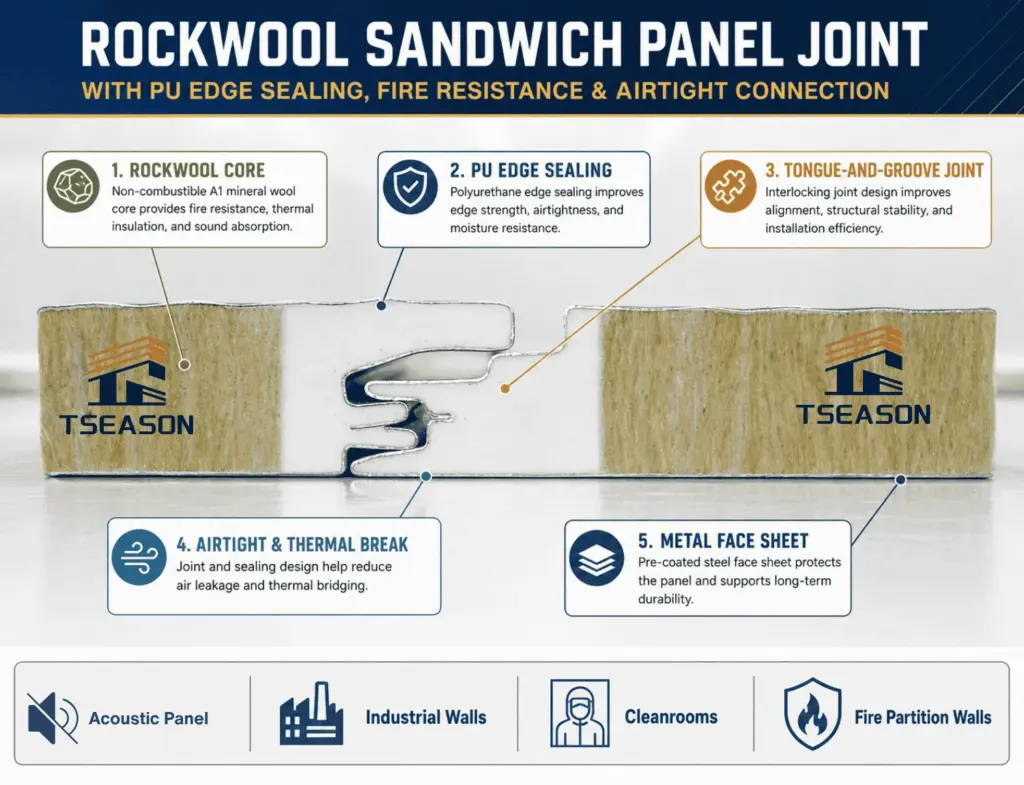
Rock wool sandwich panels are made from molten rocks such as basalt. This material offers exceptional fire resistance, excellent sound insulation, and good thermal insulation, and is widely used in industrial sectors with high fire safety or sound insulation requirements.
Key Benefits of Rock Wool
- This material meets the GB 8624 standard. It is a fireproof insulation material with non-flammable properties and excellent fireproof performance. It is suitable for places with strict fire safety requirements.
- Rock wool has excellent sound insulation performance and fully meets the sound insulation requirements of buildings.
- The material has excellent chemical stability and anti-aging performance; it can effectively resist decay, mold growth and pest damage, and maintain relatively stable thermal insulation and fire protection performance for a long time.
Potential Drawbacks of Rock Wool
- Rock wool insulation is more expensive than glass wool. In low-risk or low-noise areas, this additional investment may not be necessary.
- Rock wool has a higher density and is heavier, requiring more labor and equipment during transportation and installation, and placing higher demands on the load-bearing capacity of building structures.
Understanding Glass Wool Panel in Detail
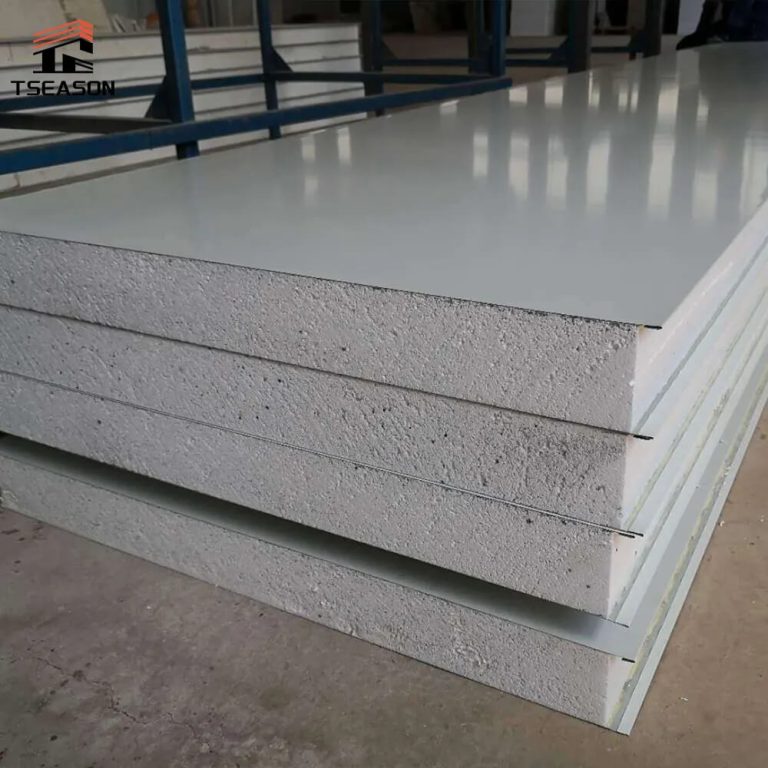
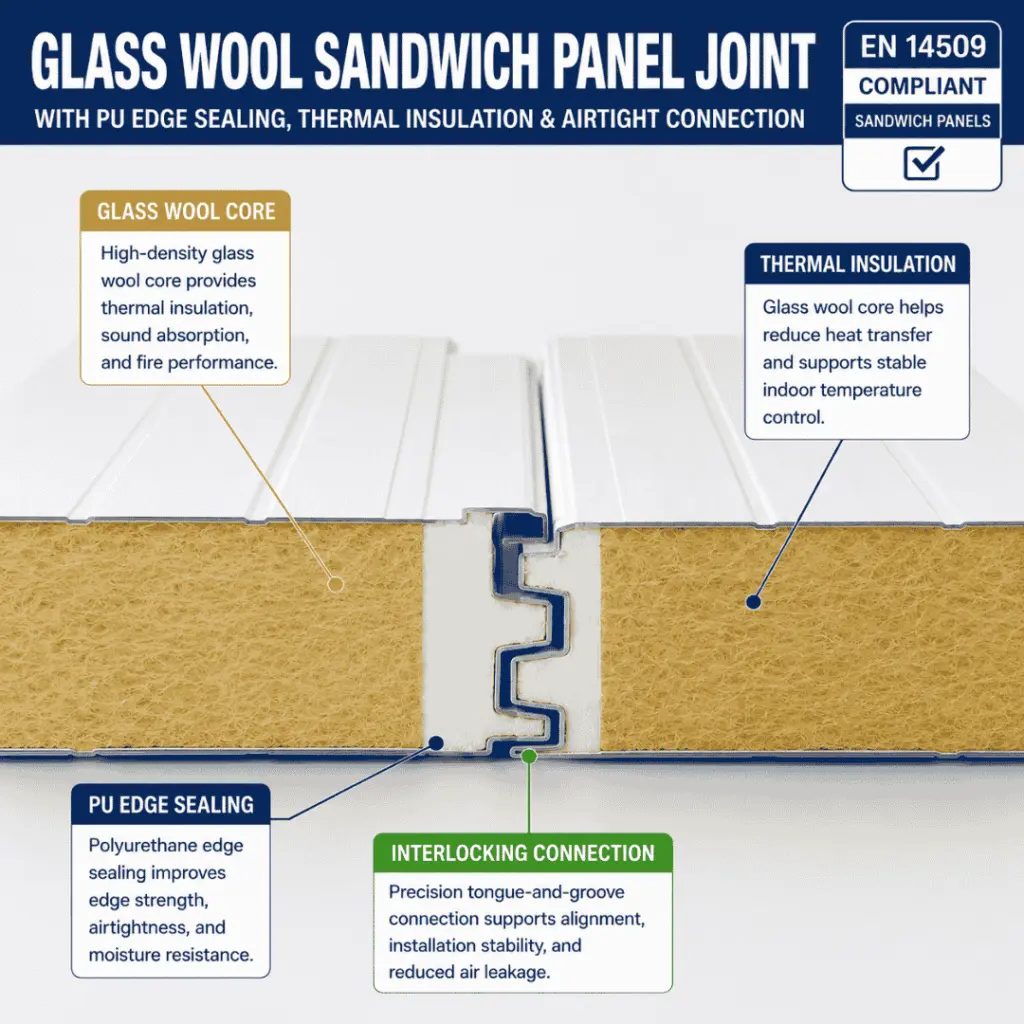
Glass wool sandwich panels are made from recycled glass and sand, and are characterized by their light weight, ease of installation, and excellent thermal insulation properties. Because they are affordable and highly effective, glass wool panels are widely used in both residential and commercial buildings.
Key Benefits of Glass Wool
- Glass wool sandwich panels are economical and extremely cost-effective, which is an ideal choice for budgeted projects.
- Glass wool has excellent sound insulation performance and is a practical and cost-effective solution suitable for meeting the needs of general residences, such as reducing the sound transmission between rooms or floors.
- The glass wool sandwich panel is light in weight and easy to install. With its low density and lightweight characteristics, it can significantly reduce the load-bearing structure of the building.
Potential Drawbacks of Glass Wool
- The material of glass wool core is relatively soft and low density. It is prone to compression deformation when subjected to significant external forces or long-term loads.
- Glass wool is prone to fine fibers and dust during cutting and installation, which will be irritating when touched. Protective equipment must be worn during installation.
Moisture Resistance Comparison
Both glass wool sandwich panels and rock wool sandwich panels have certain moisture-proof performance, but they cannot be completely waterproof. The fiber structure of glass wool is relatively loose and contains a large number of pores, which can provide excellent heat insulation effect; however, contact with moisture will weaken its insulation performance, so appropriate sealing and moisture-proof treatment measures must be taken. Rock wool sandwich panels have higher density and more stable structure; after waterproof treatment, its moisture-proof performance is significantly improved, which is suitable for construction projects with high requirements for fire protection performance and environmental stability. In general, rock wool is slightly superior in moisture-proof performance, while glass wool is better in thermal insulation performance.
How to Decide for Your Building
The choice of glass wool wall sandwich panel and rock wool wall sandwich panel needs to be determined according to the specific needs of your project. Rock wool wall sandwich panel has a high melting point, which can effectively prevent the spread of fire. With its higher density, its sound insulation performance is slightly better than that of other materials. It is especially suitable for application scenarios that require excellent sound insulation effect, fireproof performance and high temperature protection. It is the best choice for industrial and commercial places with high fireproof and high sound insulation requirements. Glass wool wall sandwich panels are more cost-effective and can still provide excellent thermal insulation performance. They are more suitable for light construction projects and can meet the needs of commercial and residential projects with limited budgets in terms of heat insulation, fire prevention and sound insulation.
How Tseason Supports the Right Panel Choice
It is very important to choose the right sandwich panel, which requires a variety of factors to be considered comprehensively. With 30 years of industry experience, Tseason provides high-quality sandwich panels suitable for a variety of application scenarios, including rock wool sandwich panels and glass wool sandwich panels, and can recommend the best solutions according to your specific needs. We have four fully automatic, energy-saving and efficient production lines to ensure accurate and efficient product performance, and at the same time meet the quality requirements of products and personalized customization needs. As a trustworthy sandwich panel manufacturer, we have always been committed to providing customers with the most professional and efficient services.
Welcome to consult our products at any time; we are happy to provide personalized suggestions to help you find the best solution that best meets your needs.

FAQs
What is the fundamental difference between rock wool sandwich panels and glass wool sandwich panels in terms of fire resistance?
Although both are inorganic Class A non-combustible materials, there is a significant difference in their maximum temperature resistance. Rock wool is produced by melting volcanic rocks such as basalt; it has an extremely high melting point, typically above 1,000°C. It does not easily melt or collapse during a fire, providing a longer fire resistance rating, making it particularly suitable for industrial facilities with extremely stringent fire safety requirements. Although glass wool is non-combustible, its temperature resistance is relatively lower, making it more suitable for the everyday fire safety needs of general buildings.
What type of sandwich panels are typically used in special-purpose buildings such as cleanrooms and cold storage facilities in electronics factories?
Rock wool sandwich panels are usually the preferred choice for these types of buildings. Cleanrooms and industrial facilities not only have strict fire resistance requirements but also demand extremely high levels of overall rigidity, flatness, and stability from the panels. Rock wool's excellent structural and chemical stability make it the top choice for these high-standard facilities.
How do glass wool and rock wool differ in terms of environmental friendliness and raw material sources?
Rock wool is primarily made from natural volcanic rocks such as basalt and diabase, which are melted and extracted at high temperatures; glass wool, on the other hand, is primarily made from recycled glass fragments and natural quartz sand. From the perspective of resource recycling, glass wool uses a high proportion of recycled materials and contains no harmful chemical components, making it stand out in terms of lightweight design and environmental friendliness.
Can glass wool sandwich panels be used in large-span flat roof structures?
It is not recommended to use standard glass wool sandwich panels directly on flat roofs that require load-bearing capacity or have large spans. Glass wool core material is relatively soft and has low compressive strength and impact resistance, making it prone to compressive deformation when subjected to prolonged heavy loads or external forces. For large-span roofs that need to bear loads or flat roofs where personnel walk on them for maintenance, rock wool sandwich panels with high compressive strength are more suitable.
Why does using rock wool sandwich panels increase the budget for a building's main structure?
Rock wool has a significantly higher density than glass wool, resulting in a heavier weight. Using rock wool sandwich panels not only increases the difficulty and labor costs associated with transportation and on-site hoisting but also places higher demands on the load-bearing capacity of the building's steel structure or walls. If the budget is limited and load-bearing capacity is a concern, the lighter glass wool is a more economical choice.